What's inside (28)
- 1Villa Kathrine
- 2Washington Park
- 3Lincoln-Douglas Debate Museum
- 4The History Museum on the Square
- 5Dr. Richard Eells House
- 6John Wood Mansion
- 7Quincy Museum
- 8Quincy Art Center
- 9East End Historic District
- 10All Wars Museum
- 111930’s Ag Museum
- 12Bob Bangert Park & Wetland
- 13Quinsippi Island Log Cabin Village
- 14Indian Mounds Park
- 15Mark Twain Boyhood Home & Museum
- 16Tom & Huck Statue
- 17Mark Twain Memorial Lighthouse
- 18Historic Downtown Hannibal
- 19Molly Brown Birthplace & Museum
- 20Jim’s Journey: The Huck Finn Freedom Center
- 21Becky’s Old Fashioned Ice Cream Parlor & Emporium
- 22Mark Twain Riverboat
- 23Rockcliffe Mansion
- 24Bluff City Theater
- 25Sodalis Nature Preserve
- 26Riverview Park
- 27Haunted Hannibal Ghost Tours
- 28Mark Twain Cave Complex
Quincy sits high on the Illinois bank of the Mississippi River, and in the 19th century it was a busy river and rail town. It once ranked as the second-largest city in Illinois.
That history still shows in its mansions, its old library and its German-built neighborhoods. The best things to do in Quincy, IL lean toward history and architecture, with a castle, a debate square and a string of house museums.
Quincy also has a famous neighbor. Hannibal, Missouri, Mark Twain’s boyhood town, is about 20 miles south across the river. Many visitors to one town spend a day in the other, so this guide covers both. The first fourteen stops are in Quincy itself.
They start downtown around Washington Park, where Lincoln and Douglas debated, then move east to the mansions and the historic district, and finish with the riverfront, the island and the bluff parks.
The last fourteen stops are in Hannibal, across the state line in Missouri, from the Mark Twain Boyhood Home to the cave that inspired Tom Sawyer. Many Quincy sites are small and keep short hours, and several open by appointment.
Some Hannibal stops, such as the riverboat and Rockcliffe Mansion, are seasonal. Check each official site before you set out, and plan to group stops by area to keep the driving short.
Things to Do in Quincy, IL
1. Villa Kathrine

Start at Villa Kathrine, the most unusual building in Quincy. It is a restored Mediterranean-style castle on the bluffs above the Mississippi, and it looks nothing like the brick buildings around it. World traveler George Metz built it in 1900.
The tile work and the tower reflect the architecture he admired on his trips abroad, and he brought that look home to the Illinois riverbank. The result is a small piece of the Mediterranean in the Midwest.
The villa also serves as Quincy’s Tourist Information Center. That makes it a practical first stop: you can see the building and pick up maps and advice for the rest of the city in one visit.
It is stop #26 on the Great River Road, so many road-trippers pass through here too. It is open for self-guided tours daily, and guided tours are by appointment. The listing marks it as family friendly and pet friendly.
Check the hours before you go, since they can change by season. Plan less than an hour. Look at the tile work up close and take in the view from the bluff.
Then download the visitors bureau’s self-guided driving tour of the historic districts before you head downtown to Washington Park. The villa is the best place to get oriented, so put it at the start of your first day.
Address: 532 Gardner Expressway, Quincy, IL 62301
2. Washington Park

Washington Park is the heart of downtown Quincy. It is the city’s original central square, laid out by Quincy’s founder, John Wood, in 1825. The park’s big moment came in 1858.
That year it was the site of the sixth Lincoln-Douglas debate, and a Lorado Taft sculpture now marks the debate site. Stand by the sculpture and you are standing where one of the most famous political contests in American history played out.
Today the square is the hub of the downtown District, with shopping and dining around it. It is also the center of the city’s outdoor life in summer. Timing your visit helps.
A farmers market is held in the park every Saturday morning from 7am-noon, May to October. Free Blues in the District concerts run on the 2nd and 4th Friday, June-August. Those are the liveliest times to come.
Plan less than an hour on its own, longer on a market morning or concert night. The Lincoln-Douglas Debate Museum is across the street, and the History Museum on the Square is nearby on Maine Street.
A good downtown loop is the park, then the debate museum on a Saturday, then the history museum. Finish with lunch in the District.
Address: 4th to 5th St., Maine to Hampshire St., Quincy, IL 62301
3. Lincoln-Douglas Debate Museum
The Lincoln-Douglas Debate Museum sits across the street from Washington Park and the 1858 debate site. It is the place to learn what was actually said here and why it mattered.
The museum hosts The Turning Point exhibit, which focuses on the sixth Lincoln-Douglas debate. It explains the issues of the day and Quincy’s place in Abraham Lincoln’s story. The museum was dedicated in October 2009.
It was a project of the Looking for Lincoln Heritage Coalition and the Lincoln Bicentennial Commission, created as a lasting legacy of the debate. Hours are short, so plan carefully. The museum is open Saturdays 10-2, and weekdays by appointment.
If you are in Quincy on a weekday, call ahead to arrange a visit. The listing marks it as accessible and family friendly. Plan less than an hour.
The museum works best paired with Washington Park: read the exhibit first, then walk across the street to the Lorado Taft sculpture that marks the debate site.
On a Saturday from May to October, you can combine both with the farmers market in the park. The museum suits history fans, students and anyone following the Lincoln story through Illinois.
The History Museum on the Square, a short walk away, also has many exhibits on Lincoln, so the two make a natural pair for a Lincoln-focused morning downtown.
Address: 128 N 5th St, Quincy, IL 62301
4. The History Museum on the Square
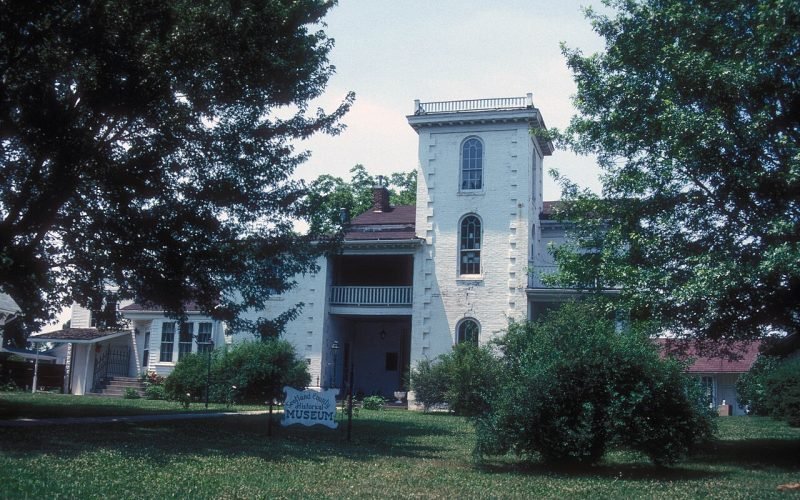
The History Museum on the Square fills Quincy’s original public library, a short walk from Washington Park. The building itself is a highlight, with a three-story circular corner tower that stands out on Maine Street.
Inside, the museum tells the story of Quincy and Adams County. It holds Quincy-area artifacts, a stained glass gallery and a Mormon City of Refuge display.
Many of the permanent exhibits interpret the life and times of Abraham Lincoln, which ties it closely to the debate site nearby. Outside, look for the sculpture garden.
It shows architectural pieces from Quincy buildings that no longer stand, which is a clever way to see what the city has lost. The museum is open Tuesday to Friday 10-4pm and Saturday 10-5pm. It is closed Sunday and Monday.
There is a gift shop, and the museum is accessible. Plan one to two hours. This is the best single museum for understanding Quincy as a whole, so visit it early in your trip.
Pair it with Washington Park and the Lincoln-Douglas Debate Museum for a downtown morning. The museum suits history fans and families with older children.
The stained glass gallery and the sculpture garden also appeal to visitors more interested in art and architecture than in dates. Check the museum’s site for current rotating exhibits before you go.
Address: 332 Maine Street, Quincy, IL 62301
5. Dr. Richard Eells House
The Dr. Richard Eells House is Quincy’s Underground Railroad Museum. It tells one of the most important stories in the city’s past, and it is close to downtown on Jersey Street. Quincy sat right across the river from Missouri, which was a slave state.
That made the city a crossing point for freedom seekers. The Eells home was a key stop for people crossing the Mississippi on their way north. The exhibits tell those stories.
They cover escapes, the courage of the people involved and Quincy’s role in aiding hundreds on their journey. It is a small museum, but its subject is a big one. Check the museum’s website for current tour times before you go.
Hours at small house museums like this one are often limited, so planning ahead saves a wasted trip. Plan less than an hour. The house works well as part of a history day in Quincy.
Visit it after the History Museum on the Square and before the John Wood Mansion, so you see the city’s story in order. It also connects well with Hannibal.
Jim’s Journey: The Huck Finn Freedom Center, across the river in Hannibal, covers the history of African Americans there. Visiting both gives a fuller picture of life on the two sides of the river before the Civil War.
Address: 415 Jersey Street, Quincy, IL 62301
6. John Wood Mansion

The John Wood Mansion is the restored home of Quincy’s founder. John Wood founded the city and later became the 12th governor of Illinois, so this house is where the city’s story begins. Wood built the Greek Revival mansion between 1835 and 1838.
It was added to the National Register of Historic Places in 1970. The house has been restored to show how a leading family lived in early Quincy. The site has more than the mansion.
An 1835 pioneer log cabin is preserved on the grounds, showing a very different kind of early home. A parsonage displays items on the history of Adams County. Together, the three buildings give a good sense of the town’s first decades.
Arts and history tours are offered. Check with the operator for current tour days and admission before you go, since hours at historic houses often change by season. Plan one to two hours.
The mansion is on South 12th Street, close to the East End Historic District, so you can pair a tour with a drive or walk through the historic homes nearby. The Quincy Museum on Maine Street is also in this part of town.
The John Wood Mansion suits history fans and anyone who likes old houses. Families with children often find the log cabin the most interesting part, since it is easy to picture daily life there.
Address: 425 South 12th Street, Quincy, IL 62301
7. Quincy Museum
The Quincy Museum fills a grand mansion on Maine Street. It is in the former Newcomb-Stillwell Mansion, built in 1890 and 1891 for the founder of the Quincy Paper Company. The building is the first thing you notice.
It is a three-story Richardsonian Romanesque house with a limestone exterior and a large conical tower. It was added to the National Register of Historic Places in 1982. Inside, the first floor is restored to the late 1800s.
Look for the 14-karat gold woodwork, which shows how wealthy the original owner was. The second and third floors have rotating exhibits, so the upper floors change from visit to visit. Group tours are available by appointment.
Check the museum’s site for current hours and admission before you go. Plan one to two hours. The Quincy Museum is in the east part of the city, near the John Wood Mansion and the East End Historic District.
A good afternoon is the John Wood Mansion first, then a drive through the East End, then the Quincy Museum. The museum suits visitors who enjoy historic interiors and changing exhibits.
It also gives a sense of the wealth that river trade brought to Quincy in the late 19th century, which helps explain the mansions you will see on the drive.
Address: 1601 Maine Street, Quincy, IL 62301
8. Quincy Art Center
The Quincy Art Center is the city’s museum of the visual arts. It sits on the grounds of the Lorenzo Bull Mansion, which is now the Women’s City Club, on Jersey Street. The art center presents a range of exhibits and shows during the year.
The changing program means a visit shows something different each time, from regional artists to themed shows. It also offers group classes and events open to the public.
If you are in town for a few days, check the calendar for a class or an opening night, which can be a good way to meet local people. Check the art center’s website for current exhibits and hours before you go, since they are not listed here.
Plan less than an hour for the galleries. The art center is a short, calm stop, and the setting on the grounds of a historic mansion adds to the visit. Walk around the grounds after you leave the galleries.
The art center pairs well with the Dr. Richard Eells House, which is also on Jersey Street, and with the mansions of the East End Historic District nearby. A good order is the art center first, then a walk or drive through the historic district.
It suits art lovers and visitors who want a break from history museums. Families with older children may also enjoy the changing shows, and the classes are a good fit for anyone staying longer in Quincy.
Address: 1515 Jersey, Quincy, IL 62301
9. East End Historic District

The East End Historic District is where Quincy’s architecture is on full display. It covers the blocks from 12th to 24th Streets, between Maine and State Streets, and it has homes of every period and style since 1850. Most of the homes have been restored.
The streets are lined with sugar maples, tulip trees, dogwood and redbud, which makes spring and fall especially good times to visit. In those seasons, the trees frame the houses beautifully.
The easiest way to see the district is with the Quincy visitors bureau’s self-guided driving tour of the city’s historic districts. It is available online at seequincy.com, so download it before you go.
The tour points out the most interesting houses and tells their stories. These are private homes, so enjoy them from the street and respect the residents’ privacy. Plan one to two hours, depending on whether you drive or walk.
A slow drive with a few stops to walk a block or two works well. Bring a camera, since the variety of styles is the main attraction.
The district is close to the John Wood Mansion and the Quincy Museum, so it fits naturally between them on an east side afternoon. It suits architecture fans, photographers and anyone who enjoys a quiet walk past grand old houses. Start at Villa Kathrine for maps if you have not downloaded the tour.
Address: 12th-24th Streets, Maine to State Streets, Quincy, IL 62301
10. All Wars Museum
The All Wars Museum sits on the grounds of the Illinois Veterans’ Home, on North 12th Street. It holds 10,000 artifacts and exhibits that span from the American Revolution to the War on Terrorism. The setting is as interesting as the museum.
The Illinois Veterans’ Home was dedicated in 1886, and it is one of the nation’s largest and oldest veterans homes.
It is often called a city within the city, because it has its own post office, bank, chapel, cemetery, television station and utility system. The grounds also have a deer park, which is a favorite with children.
It makes the visit work for families as well as for history fans. Check the museum’s website for current visiting hours before you go. Because the museum is on the grounds of a working veterans home, follow any visitor rules posted at the entrance.
Plan one to two hours: the museum first, then a short walk or drive around the grounds and the deer park. The collection is large for a museum of its kind, so military history fans may want longer. The museum is on the north side of the city.
Pair it with the Ag Museum on the northern edge of Quincy, if you have booked an appointment there, or with Bob Bangert Park on the north riverfront. It suits veterans, military history fans and families.
Address: 1710 North 12th Street, Quincy, IL 62301
11. 1930’s Ag Museum
The 1930’s Ag Museum is a small farm museum on the northern edge of Quincy. It is privately owned by a former educator and is free to enter, but it is open by appointment only, so call ahead. The collection is the reason to come.
The museum has 42 John Deere farm implements made from the late 1920s through 1940. The star piece is a fully restored 1936 Model B tractor. There is more than machinery.
The museum also shows antique horse equipment, period farmhouse furnishings and tools from a 1930s farmstead. Together, they give a clear picture of farm life in that decade. Group tours are by appointment as well.
If you are traveling with a group, ask about a guided visit when you call. Plan less than an hour. The museum is a short, personal stop in a private collection. Bring questions if you have a farming background.
The Ag Museum suits farm families, tractor fans and anyone curious about rural life before World War II. It is also a good stop for children who like big machines.
Because it is on the north edge of town, pair it with the All Wars Museum at the Illinois Veterans’ Home on North 12th Street. Book the appointment first, then plan the rest of the morning around it.
Address: 1435 Boy Scout Road, Quincy, IL 62305
12. Bob Bangert Park & Wetland
Bob Bangert Park & Wetland is a quiet nature stop north of Quincy’s riverfront. It is an interpretive wetland, created with the Mississippi Valley Hunters & Fishermen Association. The park covers 26 acres.
It includes prairie restoration, an observation deck and an educational trailer. The observation deck is the best spot to watch birds and look out over the wetland.
The park hosts youth environmental programs with the Quincy Park District, so it is a good choice for families with children interested in nature. Check the park district’s calendar for programs during your visit. Anglers have options too.
A boat ramp and shore fishing are available, so you can bring a rod and spend a calm hour by the water. Plan less than an hour for a walk and a look from the deck, or longer if you fish.
Bring binoculars for birding, and insect repellent in summer, since wetlands can be buggy. The park suits birders, anglers and families who want a short outdoor break between museums.
It sits along the north riverfront, so pair it with the All Wars Museum on the north side of the city. It is also a good contrast to Indian Mounds Park and Quinsippi Island, which show other sides of Quincy’s riverside landscape. Visit early or late in the day for the best chance of seeing wildlife.
Address: 1925 Bonansinga Dr, Quincy, IL 62301
13. Quinsippi Island Log Cabin Village
Quinsippi Island is a 130-acre island park in the Mississippi, and its main feature is a small village of Lincoln-era log cabins. To reach it, cross the bridge next to the bike park.
The cabins date back to the Lincoln era and give a sense of what pioneer life looked like in this part of Illinois. The Friends of the Log Cabin Village open the cabins a few times a year for festivals and events.
Check their schedule if you want to go inside, since the cabins are usually closed. The island is worth a visit even when the cabins are shut. It has white egret nesting and eagle spotting, so bring binoculars.
A monument marks the encampment of the Potawatomi in October 1838. The listing tags the site for spring, summer and fall visits, which are the best times for walking and wildlife. Plan an hour or two.
Walk around the cabin village, look for birds along the shore and stop at the Potawatomi monument. The island suits families, birders and history fans. Pair it with Bob Bangert Park & Wetland on the north riverfront for a nature-focused half day.
If you are visiting during a festival, plan more time, since the cabins and events can fill an afternoon.
Address: 1100 Quinsippi Island Rd, Quincy, IL 62301
14. Indian Mounds Park
Indian Mounds Park sits on a bluff on the south side of Quincy, and it preserves eight, and perhaps more, Native American burial mounds. It is a rare chance to see mounds like these inside a city. The park exists because local people fought for it.
After a petition drive to save the mounds, the city began buying the land in 1897. The park reached its present 37 acres by 1906. Landscape architect O.C. Simonds of Chicago designed the park.
Interpretive signs explain the mounds and their meaning, and a sculpture of a Native American girl stands on the grounds. The Quincy Park District runs the park. Treat the mounds with respect, since they are burial sites. Stay on paths and do not climb them.
Plan less than an hour. Read the signs as you walk, and take in the bluff setting above the river valley. The park suits history fans and visitors interested in Native American heritage.
It pairs well with the Quinsippi Island monument to the Potawatomi encampment, which tells a later chapter of the same story. It is also a calm place for a walk on a fine day, and a short drive from downtown if you want a break between museum visits.
Address: 1400 South 5th Street, Quincy, Illinois
15. Mark Twain Boyhood Home & Museum
About 20 miles south in Hannibal, across the state line in Missouri, the Mark Twain Boyhood Home & Museum is the main reason most visitors make the drive. It is the best stop in this guide for Twain fans and families.
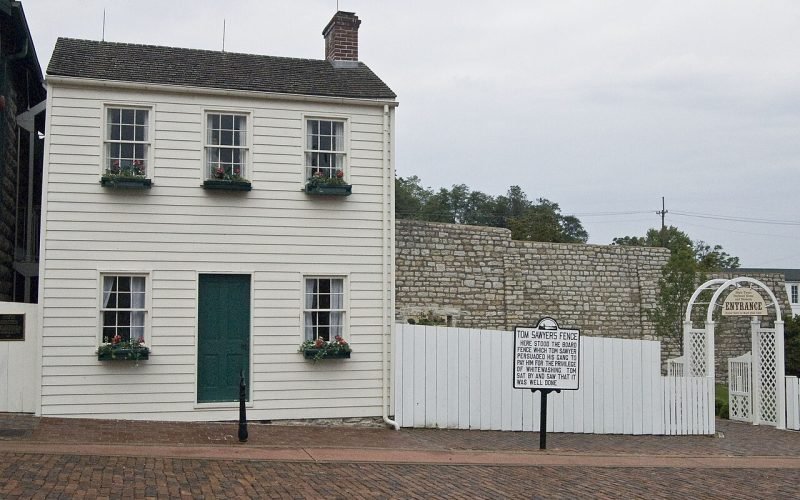
One ticket covers seven historic properties and museums. They include the Mark Twain Boyhood Home, the Becky Thatcher House, the Huckleberry Finn House, the J.M. Clemens Justice of the Peace Office and Grant’s Drug Store.
The Boyhood Home was built in 1844 and became a National Historic Landmark in 1962. The Interpretive Center shows how Twain turned his childhood friends into characters.
Its exhibits let visitors ride a raft, explore a cave, pilot a steamboat and paint the whitewashed fence. The Museum Gallery has 15 original Norman Rockwell paintings, along with Twain’s Oxford gown, his white jacket and two of his inventions.
Check the hours by season. Winter hours begin Nov. 1 (10am-4pm), and summer hours begin March 14 (9am-5pm). The museum is closed on Christmas, Easter, Thanksgiving and New Year’s Day.
Live performances and storytelling from Mark Twain take place in the summer months. Plan two to three hours. Museum tickets are not needed to enter the three gift shops. The Tom & Huck Statue and the lighthouse steps are a short walk north on Main Street.
Address: 120 N Main Street, Hannibal, MO 63401
16. Tom & Huck Statue

In Hannibal, Missouri, about 20 miles south across the state line, the Tom & Huck Statue is a classic photo stop. The bronze statue of Tom Sawyer and Huckleberry Finn stands at the foot of Cardiff Hill, at North and Main Streets.
The statue has a long history of its own. It was dedicated on May 27, 1926, and it is one of the earliest known statues erected to honor fictional characters. George Mahan conceived it and engaged Frederick Hibbard to sculpt it.
In 2009, the old masonry walls behind the statue were replaced with a new rock structure. The statue looks out over Historic Main Street, and the Mark Twain Boyhood Home & Museum cares for the grounds. This is a quick stop.
Most visitors spend a few minutes taking photos, then move on. The statue is free to see at any time. It also marks the start of the climb to the Mark Twain Memorial Lighthouse.
The steps begin near the statue, so this is a natural place to begin a walk up Cardiff Hill. Plan less than an hour, including the walk to the Boyhood Home nearby.
Visit early in the morning or late in the afternoon for softer light and fewer people in your photos. The statue suits families, literature fans and anyone who grew up with the books. It is the easiest way to begin a Hannibal day, since the main museums are a short walk away.
Address: North and Main Streets, Hannibal, MO 63401
17. Mark Twain Memorial Lighthouse

Hannibal’s Mark Twain Memorial Lighthouse, about 20 miles south across the state line in Missouri, sits at the top of Cardiff Hill. It was built as a memorial to Mark Twain on the 100th anniversary of his birth, and it was never used for navigation.
The setting is the reason to climb. The lighthouse sits on 10 acres of park atop Cardiff Hill, which was the favorite play area of Tom Sawyer and Huckleberry Finn in the books.
The area around it has a panoramic view of Hannibal and the Mississippi River. Be ready for the climb. It is 244 steps, starting near the Tom & Huck Statue at North and Main Streets. Take it slowly in summer heat, and bring water.
If the steps are too much, parking is available near the top. A rear entrance from Cardiff Hill Drive has handicapped accessible parking, so visitors with limited mobility can still enjoy the view. The public is not allowed inside the lighthouse.
The view from the hilltop is the main reward. Plan less than an hour. Climb in the late afternoon for the best light over the river, then walk back down to Main Street for dinner.
The lighthouse pairs naturally with the statue at the bottom of the steps and the Boyhood Home nearby. It suits active visitors, photographers and anyone who wants the best view of Hannibal.
Address: Top of Cardiff Hill, Main & North Streets, Hannibal, MO 63401
18. Historic Downtown Hannibal
Across the state line in Missouri, about 20 miles south, Historic Downtown Hannibal is the center of a visit. Main Street is lined with restored buildings, and the downtown businesses are locally owned and operated. The river is close.
The Mississippi is just one block from Main Street, so you can walk from the shops to the waterfront in a few minutes. Look up and around as you walk. Murals are scattered through downtown, and most were painted by artists Bob Allen and Ray Harvey.
They make good backdrops for photos. For the 2019 bicentennial, new Ghost Signs were painted to recreate old 1800s advertisements, such as the Ladies Shoe and Diamond Jo Line Steamers signs. Parking is easy.
There is plenty of free parking by the river and in public lots, so leave the car once and walk. Plan two to three hours, including time in shops and a meal.
The downtown area connects most of the Hannibal stops in this guide: the Boyhood Home, the Molly Brown Birthplace, Becky’s ice cream parlor, Bluff City Theater and the riverboat landing are all close by.
Historic Downtown Hannibal suits shoppers, photographers and families. Walk Main Street in the morning, visit the museums at midday and take a riverboat cruise or a ghost tour in the evening. It is the easiest place in either town to spend a relaxed day on foot.
Address: 115 N. Main St., Hannibal, MO 63401
19. Molly Brown Birthplace & Museum
Hannibal, Missouri, about 20 miles south across the state line, is also home to the Molly Brown Birthplace & Museum, which tells the story of another famous Hannibal native. The Unsinkable Molly Brown, born Maggie Tobin, was born in Hannibal in 1867.
She is best known as a Titanic survivor. She was on her way back to Hannibal when the ship sank in 1912. Visitors tour the small cottage where she was born and hear about her childhood in Hannibal.
The birthplace and museum have been relocated and are open again for tours. Self-guided tours cost $5 and use a QR code on your own phone, so bring a charged phone with you.
The listing gives hours of 9am to 5pm daily, with tours until 4:30pm, and seasonal tour hours of 9am to 4pm. Call to confirm before you go. Plan less than an hour. The cottage is small, so the visit is quick, but the story is a good one.
It makes a nice change from the Mark Twain sites, since it tells a different side of the town’s history. The museum is on North Main Street, close to the Boyhood Home and Historic Downtown Hannibal. Fit it in between the Twain museum and lunch.
It suits history fans, families and anyone interested in the Titanic. The low price makes it an easy add to a day downtown.
Address: 400 N. Main Street, Hannibal, MO 63401
20. Jim’s Journey: The Huck Finn Freedom Center
Across the state line in Hannibal, Missouri, about 20 miles south, Jim’s Journey: The Huck Finn Freedom Center details the history of African Americans in Hannibal. It links that history back to the novels of Mark Twain.
The museum calls itself the country’s first memorial to Jim, the character in Huckleberry Finn, and to Jim’s prototype, Daniel Quarles. It is the only African American history museum in Northeast Missouri.
The exhibits highlight the lives and accomplishments of prominent African Americans from Hannibal. They add depth to the Twain sites and tell parts of the town’s story that the novels only touch on. Visits are by appointment.
Call (217) 617-1507 to arrange a tour before you go. Plan less than an hour. The museum is close to the Mark Twain Boyhood Home & Museum properties, so it fits easily into a downtown Hannibal day.
Visit it after the Boyhood Home, so the two stories sit side by side in your mind. It also pairs well with Quincy’s Dr. Richard Eells House, the Underground Railroad Museum across the river.
Seeing both gives a fuller picture of life on the two sides of the Mississippi before the Civil War. The museum suits history fans, students and anyone who wants to understand the real people behind the novels.
Address: 509 N. 3rd Street, Hannibal, MO 63401
21. Becky’s Old Fashioned Ice Cream Parlor & Emporium
Main Street in Hannibal, Missouri, about 20 miles south across the state line, has Becky’s Old Fashioned Ice Cream Parlor & Emporium, the sweet stop on a Main Street walk. It is a good break between museums, especially with children.
The parlor serves cones, shakes, old-fashioned ice cream sodas, sundaes and malts. The ice cream soda is the classic order, and it fits the old-time setting. The emporium side is worth a look too.
It sells reproduction tin signs, non-battery operated toys, nostalgic candies, Rockwell prints and classic children’s books. It is a good place to find a small souvenir that is not a T-shirt.
On Mondays in the summer, authentic parlor music is played at 6:30 pm. If you are in town then, plan an early evening visit. It is open all year: Monday to Saturday 10am to 4pm, and Sunday 12pm to 4pm.
Note the early closing time, which means it suits an afternoon break rather than an after-dinner treat. Plan less than an hour. Becky’s is on North Main Street, close to the Molly Brown Birthplace and the Boyhood Home.
A good plan is the Twain museum in the morning, lunch downtown and ice cream here in the afternoon before the lighthouse climb. It suits families, couples and anyone with a sweet tooth. It is a small stop, but it adds to the feel of a day on Main Street.
Address: 318 N. Main Street, Hannibal, MO 63401
22. Mark Twain Riverboat

The Mark Twain Riverboat docks in Hannibal, Missouri, about 20 miles south across the state line, and it is a seasonal stop.
Sightseeing cruises depart from Center Street Landing three times daily between Memorial Day and Labor Day, with two departures daily during September and October. Plan a summer or early fall visit if you want to ride.
The boat has been a fixture on the Mississippi at Hannibal for more than 30 years. It was built in 1964 and is 120 ft. long and 33 ft. wide, with a 400-passenger capacity. There are several ways to ride.
The one-hour narrated sightseeing cruises include commentary on river history, legends and sights. Two-hour dinner cruises depart at 6:30 p.m., and Captain’s Sunday Lunch events run on some Sundays. The dinner schedule can vary, so call for times.
The boat is wheelchair accessible, with some limitations. Ask about access when you book if anyone in your group needs it. Plan one to two hours.
The sightseeing cruise is the best way to see Hannibal from the water, and it gives a feel for the river life Twain wrote about. It suits families, couples and first-time visitors.
Center Street Landing is close to Historic Downtown Hannibal, so pair a cruise with an afternoon on Main Street. For a full evening, take the dinner cruise and walk the lit-up downtown afterward.
Address: Center Street Landing, Hannibal, MO 63401
23. Rockcliffe Mansion

Rockcliffe Mansion stands in Hannibal, Missouri, about 20 miles south across the state line, and it is a seasonal stop. Guided tours run daily April 15 to Nov. 15, 10am to 5pm, with the last tour at 4pm.
Plan your visit for those months, since the season ends in mid-November. Lumber baron John J. Cruikshank, Jr. started building the 13,500 sq. ft mansion in 1898, and the family moved in by 1900.
After Cruikshank died in 1924, the house sat closed and vacant for 43 years. Its 30 rooms were saved just days before a planned demolition in 1967. That long closure is why so much survives.
The house holds many original furnishings, L.C. Tiffany lighting fixtures and stained glass windows. There is a Twain link too. Samuel Clemens addressed 300 of Hannibal society from the Grand Staircase during his last visit to Hannibal in 1902.
Stand at the foot of the staircase and picture the scene. The guided docent tour lasts about an hour. The mansion also operates as a bed and breakfast, so you can stay overnight if you want a longer visit. Plan about an hour and a half.
Rockcliffe suits fans of historic houses and anyone who enjoyed the Quincy mansions across the river. It pairs well with the John Wood Mansion and the Quincy Museum for a mansion-themed weekend in both towns.
Address: 1000 Bird Street, Hannibal, MO 63401
24. Bluff City Theater
For an evening out, Hannibal, Missouri, about 20 miles south across the state line, has Bluff City Theater, an artist-driven professional theater company.
It puts an emphasis on literary works adapted for the stage, which fits a town so tied to a famous writer. The program changes by season. Seasons can include drama, comedy and musicals, plus readings and concert formats.
That variety means there is usually something for most tastes. The setting is small. The company performs in an intimate 90-seat theater, so every seat is close to the stage. Shows can sell out quickly because of the size.
Check the theater’s website for the current season and tickets before your trip, and book early for popular shows. Plan an evening for a show. Bluff City Theater is downtown, on Broadway, close to Main Street.
A good plan is a day at the Twain sites, dinner downtown and a show here in the evening. It suits theater lovers and couples looking for a night out.
The literary focus also makes it a good choice for book lovers who have spent the day at the Boyhood Home. If you are staying in Quincy, the drive back across the river is about 20 miles, so allow for it after a late show.
Address: 212 Broadway, Hannibal, MO 63401
25. Sodalis Nature Preserve

A few blocks from downtown Hannibal, Missouri, about 20 miles south across the state line, Sodalis Nature Preserve is the best nature stop close to Main Street. The 185-acre preserve is Hannibal’s second-largest park.
The preserve has a paved walking and biking loop and woodland hiking. The paved loop suits families with strollers, while the woodland trails give a quieter walk. The bluffs are the unusual part.
Cavernous openings are cut into the limestone bluffs within the park. They are linked to the preserve’s most important residents. The park is home to one third of all known myotis sodalis, an endangered bat species, and the bats give the preserve its name.
That makes the preserve important for the survival of the species. The bats are nocturnal, so you are unlikely to see them, but the preserve can be explored during the day. Read the signs to learn about the bats and why the site matters.
Plan one to two hours. Walk the paved loop, then look at the bluff openings from the trail. The preserve suits families, walkers and anyone curious about bats who wants a break from the Twain sites.
It is a few blocks from downtown, so it fits easily into a Hannibal day. Visit in the morning before the museums open, or in the late afternoon when the woods are cooler. Pair it with Riverview Park for more trails.
Address: 819 Ely Street, Hannibal, MO 63401
26. Riverview Park

Riverview Park, in Hannibal, Missouri, about 20 miles south across the state line, covers 465 acres of forested land with views of the Mississippi River. It is the largest green space in this guide and a good place for a long walk.
The park has two memorials. The Clemens Memorial Statue honors the town’s most famous son, and the Pettibone Memorial is also in the park. Both are worth finding on a walk.
There are facilities for a day out: a shelter, picnic tables, a playground and restrooms. The park has 1 shelter that the public can rent, so book ahead for a group picnic. The trails are the main draw.
Paved and unpaved trails include White Pines, Soap Hollow and North River Road. They are for non-motorized traffic only, and bikes are allowed. The park was entered in the National Register of Historic Places on September 6, 2005. Plan one to two hours.
Walk to the river overlooks for the best views, then find the Clemens statue. Bring a picnic on a fine day, since the playground and shelter make it easy to stay a while with children. Riverview Park suits families, walkers and cyclists.
Pair it with Sodalis Nature Preserve for more trails, or with the lighthouse climb for another view of the river. It is a good antidote to a busy museum morning.
Address: 2000 Harrison Hill, Hannibal, MO 63401
27. Haunted Hannibal Ghost Tours
After dark in Hannibal, Missouri, about 20 miles south across the state line, Haunted Hannibal Ghost Tours run in the evening. They combine Hannibal history, ghost stories and interactive experiences, and they are a good way to end a day in town.
The tour is a guided driving tour on a shuttle. It visits haunted sites past and present, including the mansions on Millionaires’ Row. Riding rather than walking means you can cover more of the town after dark.
The highlight for many is the stop at Old Baptist Cemetery. The tour includes an investigation there, among the graves of slaves and Civil War soldiers. Space is limited, so tours must be booked in advance.
Book at hauntedhannibal.com or by calling (573) 248-1819. Plan one to two hours in the evening. The tour suits teenagers, adults and anyone who enjoys a good ghost story with their history.
Younger children may find parts of it too spooky, so use your judgment. A good Hannibal day ends this way: the Twain sites in the morning, Main Street and ice cream in the afternoon, dinner downtown and the ghost tour after dark.
If you are driving back to Quincy afterward, allow time for the drive across the river. Check the tour’s departure point when you book, since you will want to park nearby.
Address: 501 Union Street, Hannibal, MO 63401
28. Mark Twain Cave Complex
Cross into Missouri and drive about 22 miles south to Hannibal for the Mark Twain Cave Complex. This is the real cave behind the one in The Adventures of Tom Sawyer, and it is the best reason to leave Quincy for an afternoon. A guide leads every group.
The tour lasts 60 minutes on easy paths with electric lights, so grandparents and young kids can usually manage it. Keep your eyes on the walls. Samuel Clemens signed his name in here, and nobody spotted it until recently.
Two National Landmarks share the site: Missouri’s oldest show cave and its newest. Down below, the air holds at 52 degrees in every season, so a sweater makes sense even in August. The doors open all year, but the schedule shifts.
Summer, from Memorial Day to Labor Day, runs longest, 8:30am to 8pm. In January to March and again in November and December, hours are 9:30am to 5pm. April, May, September and October sit in between at 9am to 6pm.
Above ground there is Cave Hollow Winery, pouring wine grown and made in Missouri. In winter it opens Saturdays only. Cave Hollow Theatre stages Mark Twain Live, a show of about one hour built from his speeches and writings.
Check the official site for show days before you go. Two to three hours covers the cave and a tasting.
Address: 300 Cave Hollow Road, Hannibal, MO 63401
Things to Do in Quincy, IL with Kids
Quincy has several stops that work well for families. The All Wars Museum at the Illinois Veterans’ Home has a deer park on its grounds, and the 1930’s Ag Museum has a restored 1936 John Deere tractor and free entry by appointment.
Bob Bangert Park & Wetland has an observation deck and youth nature programs, and Quinsippi Island has a Lincoln-era log cabin village and eagle spotting. The John Wood Mansion includes an 1835 log cabin that children can picture living in.
Across the river, Hannibal is built for families. The Mark Twain Boyhood Home & Museum’s Interpretive Center lets children ride a raft, pilot a steamboat and paint the whitewashed fence.
The Mark Twain Cave Complex has an easy 60-minute guided tour, and the Mark Twain Riverboat runs narrated cruises in season. Finish at Becky’s Old Fashioned Ice Cream Parlor & Emporium on Main Street.
Frequently Asked Questions
How far is Hannibal from Quincy?
Hannibal, Missouri, is about 20 miles south of Quincy, across the Mississippi River. The Mark Twain Cave Complex is about 22 miles away. Most of the Hannibal stops in this guide, including the Boyhood Home, the Tom & Huck Statue and the lighthouse, are close together on and near Main Street.
Where did the Lincoln-Douglas debate take place in Quincy?
The sixth Lincoln-Douglas debate took place in Washington Park in 1858. A Lorado Taft sculpture marks the debate site. The Lincoln-Douglas Debate Museum, across the street, hosts The Turning Point exhibit and is open Saturdays 10-2 and weekdays by appointment.
Which Quincy museums need an appointment?
The 1930’s Ag Museum is open by appointment only. The Lincoln-Douglas Debate Museum opens on Saturdays and by appointment on weekdays, and the Quincy Museum offers group tours by appointment.
In Hannibal, Jim’s Journey: The Huck Finn Freedom Center is also visited by appointment. Call ahead before you drive out.
Is there anything to do in Quincy in winter?
Yes. Villa Kathrine is open for self-guided tours daily, and the History Museum on the Square is open Tuesday to Saturday. In Hannibal, the Mark Twain Boyhood Home & Museum keeps winter hours from Nov. 1, and the Mark Twain Cave Complex is open year round at a steady 52 degrees.
What should I see first in Quincy?
Start at Villa Kathrine, which is also Quincy’s Tourist Information Center, and pick up the self-guided driving tour of the historic districts. Then head downtown to Washington Park and the History Museum on the Square, and finish with the mansions of the East End.
Final Thoughts
Plan Quincy in two halves. Spend the morning downtown: Villa Kathrine for maps, then Washington Park, the Lincoln-Douglas Debate Museum on a Saturday and the History Museum on the Square.
In the afternoon, move east to the Eells House, the Quincy Art Center, the John Wood Mansion, the East End Historic District and the Quincy Museum.
Save the north side, with the All Wars Museum, Bob Bangert Park and Quinsippi Island, for a second morning, and add Indian Mounds Park on the south bluff. Give Hannibal a full day of its own.
Start at the Tom & Huck Statue and the Boyhood Home, walk Main Street, then climb to the lighthouse. Visit the cave in the afternoon, and end with a riverboat cruise in season or a ghost tour after dark. If time is short, choose Villa Kathrine and Washington Park in Quincy and the Boyhood Home in Hannibal.
Know a place in Quincy we missed? Suggest a place