What's inside (20)
- 1Johnstown Flood Museum
- 2Heritage Discovery Center
- 3Johnstown Inclined Plane
- 4Stone Bridge
- 5Point Stadium
- 6Cambria County War Memorial Arena
- 7Wagner-Ritter House & Garden
- 8Bottle Works Ethnic Arts Center
- 9Grandview Cemetery
- 10Stackhouse Park
- 11Laurel Highlands Hiking Trail
- 12Staple Bend Tunnel
- 13Johnstown Flood National Memorial
- 14Ghost Town Trail
- 15Cambria County Historical Society
- 16Basilica of St. Michael the Archangel
- 17Quecreek Mine Rescue Site
- 18Flight 93 National Memorial
- 19Compass Inn Museum
- 20Fort Ligonier
Johnstown sits in a tight valley in Cambria County, where the Stonycreek and Little Conemaugh rivers meet to form the Conemaugh. That setting shaped its history.
On May 31, 1889, the South Fork Dam failed upstream and the flood that followed tore through the city below. The city rebuilt as a steel town around the Cambria Iron works, and both stories are still easy to see from the streets downtown.
This guide to things to do in Johnstown, PA starts in the city. Heritage Johnstown runs the flood museum, the Heritage Discovery Center and a historic house within walking distance of each other.
The Inclined Plane climbs the hillside to Westmont, a short walk from the cemetery where hundreds of flood victims lie. Downtown also has the Stone Bridge, a historic ballpark, a hockey arena and an arts center in the old Cambria City neighborhood.
The second half of the list moves out to places within about 28 miles. The national flood memorial at the dam site, a railroad tunnel from the 1830s and two long trails are all close.
To the south are Flight 93 National Memorial and the Quecreek mine rescue site. To the west, Ligonier has an 18th-century fort and a stagecoach inn. Several stops keep short or seasonal hours, especially in winter. Each section says what the research found, but check official sites before you go.
Things to Do in Johnstown, PA
1. Johnstown Flood Museum

Start here. The Johnstown Flood Museum tells the story of May 31, 1889, when a neglected dam and a phenomenal storm led to a catastrophe that swept through the city. Everything else in this guide makes more sense once you have seen it.
The museum covers the full story. Exhibits explain the South Fork Fishing and Hunting Club and its dam, the role of the American Red Cross, the relief effort and survivor accounts.
Later floods in 1936 and 1977 are covered too, which shows that the valley’s risk did not end in 1889. An interactive map helps you place the events on today’s streets. Two things stand out.
The museum shows the Academy Award-winning film The Johnstown Flood, and it has an original Oklahoma House, one of the first pre-fabricated temporary houses sent to survivors. Seeing the small shelter makes the scale of the loss feel real.
Fall and winter hours run from September 15: Monday, Thursday, Friday and Saturday 10:00 am to 5:00 pm, and Sunday noon to 5:00 pm. The museum is closed Tuesday and Wednesday. Admission is $10 for adults, $8 for seniors and $8 for children 3 to 18.
Children 2 and under are free. A combined ticket with the Heritage Discovery Center is $16 for adults and $14 for seniors and students, and both visits must fall within five days.
Look for the beige brick building on the corner of Washington and Walnut Streets. Allow about two hours.
Address: 304 Washington Street, Johnstown, PA 15901
2. Heritage Discovery Center
The Frank & Sylvia Pasquerilla Heritage Discovery Center picks up where the flood museum stops.
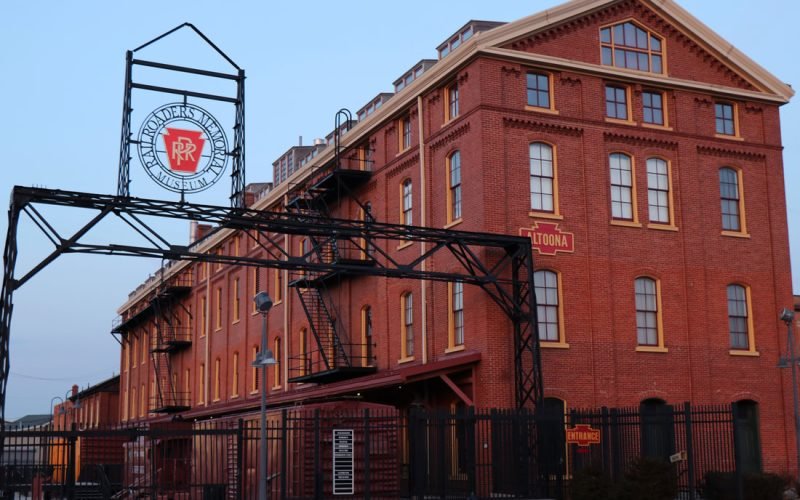
It tells the story of the immigrants who came to work in Johnstown’s mills, and it fills a five-story brick building that was built in 1907 as the Germania Brewery. The main exhibit is America: Through Immigrant Eyes.
It follows newcomers as they arrived and found work, which gives a personal view of the steel era. The Iron & Steel Gallery, featuring Mystery of Steel, explains the industry that built the city.
On the second floor, Relic Tales of the Johnstown Flood shows objects tied to the disaster. There is also an Ethnic Social Club. Families get an extra reason to come.
The Johnstown Children’s Museum shares the building, and one ticket covers everything inside. That makes this the best stop in the city on a wet day with kids.
The center keeps the same fall and winter hours as the flood museum: Monday, Thursday, Friday and Saturday 10:00 am to 5:00 pm, Sunday noon to 5:00 pm, and closed Tuesday and Wednesday.
The combined ticket with the flood museum is $16 for adults and $14 for seniors and students. The parking lot entrance is at Seventh and Broad Streets, on Route 56. Plan two to three hours, more if the children’s museum is on your list.
Address: 201 Sixth Ave.
3. Johnstown Inclined Plane

The Inclined Plane is the ride every visitor should take. It opened on June 1, 1891, about two years after the flood, to link the valley with the hillside neighborhood of Westmont above.
Guinness World Records recognizes it as the steepest vehicular funicular in the world, with a grade of roughly 72%. Each car holds 65 people, 6 motorcycles or one automobile, and the trip takes about 90 seconds.
Watching a car roll on with you is part of the fun. The view opens up fast as you climb. The incline has just come back. It closed in 2021 for a major rehabilitation and reopened to the public on September 10, 2026.
Check the official site for current hours and fares, since they may still be settling after the reopening. The upper station has a gift shop, a visitor center with a restaurant and an observation deck.
The deck gives the best view of the valley, the rivers and downtown in this guide. Come near sunset if you can. You can start at either end.
The lower station is at 206 Johns Street, across the bridge over the Stonycreek, and bus groups often park at the bottom. Riding up from downtown and walking to Grandview Cemetery from the top makes an easy loop. Allow an hour, more with a meal.
Address: 711 Edgehill Drive, Johnstown, PA 15905
4. Stone Bridge

The Stone Bridge is the most haunting landmark in Johnstown. It is a seven-arch stone railroad bridge over the Conemaugh River, built by the Pennsylvania Railroad in 1887-88, shortly before the flood. During the Johnstown Flood, the bridge held.
Debris piled up against its arches and caught fire, and the blaze killed scores of trapped people and burned for three days. Knowing that changes how you see it. This is a place where many people died. The bridge still does its original job.
It carries rail traffic today and is owned by Norfolk Southern Railway, so you may see a train cross while you watch. A community project begun in 2008 cleaned the stonework and added LED lighting that can change color and intensity.
Heritage Johnstown programs the lights, and they turn the bridge into a nighttime sight. Heritage Johnstown also runs a live webcam if you want to check the lights before heading out. This is a quick stop of well under an hour.
View it from nearby streets or the riverbank rather than trying to get onto the tracks. Go after dark for the lights, then pair it with Point Stadium or dinner downtown. If you visit the flood museum first, the bridge will mean much more.
Address: 40.3325, -78.9249 (Stone Bridge over the Conemaugh River, Johnstown, PA)
5. Point Stadium

Point Stadium sits at the meeting of the rivers, and it has been the city’s big outdoor venue for a century. The original stadium opened on July 5, 1926.
It was torn down in 2005 for an $8 million renovation, and the new 7,500-seat venue opened on August 8, 2006. Baseball is the reason to come.
The stadium hosts the All-American Amateur Baseball Association national tournament, and the AAABA Hall of Fame was set up here in 1994. In summer, the tournament brings top amateur players to town, and the crowds give the city a different energy.
Regular seasons fill the calendar too. The Johnstown Mill Rats of the Prospect League play here, and so do the Pitt-Johnstown Mountain Cats. A summer evening game is a cheap, easy night out, especially for families. The stadium has history beyond sport.
Harry Truman gave a major speech here in October 1948, which tells you how central this spot has long been to the city. Check team schedules for game dates and ticket prices before you go. Plan two to three hours for a game.
The stadium is close to the Inclined Plane’s lower station and the Stone Bridge, so you can ride the incline in the afternoon, catch a game, and see the lit bridge on the walk back.
Address: 100 Johns St. Johnstown, PA 15901
6. Cambria County War Memorial Arena

Johnstown is a hockey town, and the War Memorial Arena is where that shows. The 4,001-seat multi-purpose arena opened on October 16, 1950. It was built for the Johnstown Jets of the Eastern Hockey League.
Today’s team is the Johnstown Tomahawks, who have played here in the NAHL since 2012. A Tomahawks game is the easiest way to see the building full. The arena is old but not tired.
It was renovated in 2002 and again in 2015-16, so the building feels updated while keeping its mid-century character. The size keeps every seat fairly close to the ice.
A game is the best winter night out in the city, and the season runs through the cold months. When the heritage museums are on short winter hours and the outdoor sites are cold, hockey fills the gap. Families and groups will find it an easy evening.
Check the Tomahawks schedule for dates and tickets before you go. The arena also hosts other events, so look at its calendar for concerts and shows. Plan two to three hours. The arena is downtown on Napoleon Street, a short drive from the flood museum, so dinner downtown before a game is easy to arrange.
Address: 326 Napoleon Street, Johnstown, Pennsylvania 15901
7. Wagner-Ritter House & Garden
The Wagner-Ritter House is the smallest Heritage Johnstown site and the most personal. It is a historic house museum that tells the story of an immigrant family living in the shadow of the mills.
Where the Heritage Discovery Center gives the big picture of immigration and steel, this house shows daily life for one family. You see how a working household lived in rooms close to the noise and smoke of industry.
It makes the larger exhibits feel more human. The house includes a historically accurate garden. In season, it adds to the visit and shows how families grew food in small city plots. Timing is the catch.
The house closed for winter as of October 23 and will reopen next spring. Plan your visit for the warmer months, and check Heritage Johnstown’s site for the reopening date and hours before you go.
It sits a few blocks from the Heritage Discovery Center on Broad Street, so the two pair naturally. See the discovery center first for context, then walk over to the house. Allow under an hour here.
Heritage Johnstown sells a combination pass that covers several of its sites, which can save money if you plan to see the flood museum and the discovery center on the same trip. Ask about it when you buy your first ticket.
Address: 418 Broad Street, Johnstown, PA
8. Bottle Works Ethnic Arts Center
Bottle Works brings the arts to Cambria City, one of Johnstown’s historic neighborhoods. Also known as Arts on 3rd, it is a non-profit arts organization with two cultural centers on 3rd Avenue in the Cambria City cultural district.
The centers are working spaces, not just galleries. Artists exhibit, create, teach and sell their work here, and musicians perform. That means a visit can include a show, a class or a chance to buy something made locally.
The facilities include the Jackie’s Garden Works Green Roof and the FNB Pop Plaza, which add outdoor space to the two buildings. This is the place to see the creative side of a city best known for steel and floods.
Hours are Tuesday 10 AM to 4 PM, Wednesday to Friday 10 AM to 7 PM and Saturday 10 AM to 3 PM. It is closed Sunday and Monday. Call 814-535-2020 to ask about events, classes and current exhibits. Plan an hour, longer if a show or class is on.
Bottle Works sits close to the Heritage Discovery Center, so the two make a natural Cambria City pair. Walk the neighborhood afterward if the weather is good. The evening hours midweek make it a useful stop after the museums close.
Address: 411 & 413 3rd Avenue, Johnstown, PA 15906
9. Grandview Cemetery

Grandview Cemetery holds the most moving site connected to the flood. Its Unknown Plot contains the remains of 777 flood victims who could not be identified. Standing among them is a quiet way to grasp the scale of the disaster. The cemetery itself is large.
It was established in 1885 and covers 235 acres, with more than 70,000 burials. It was added to the National Register of Historic Places in 2025. A state flood memorial stands near the Unknown Plot.
It was dedicated on May 31, 1892, on the third anniversary of the flood, before a crowd of about 10,000. The setting high above the valley adds weight to the visit. This is an active cemetery, so be respectful and keep to the roads and paths.
There is no admission listed, and the visit is short. The best way to arrive is from the Inclined Plane. Heritage Johnstown says the cemetery is a half-mile walk or drive from the top of the incline.
Ride up, walk over to the Unknown Plot, then return for the view from the observation deck. That loop takes about two hours and covers two of the most important flood sites in the city. Wear comfortable shoes, since the cemetery is big and hilly.
Address: 801 Millcreek Road, Johnstown, Pennsylvania
10. Stackhouse Park
Stackhouse Park is Johnstown’s wooded escape, a forested ravine between Westmont and the West End. It has a sad origin. The father of Powell Stackhouse, president of Cambria Iron Works, gave the land to the city in remembrance of his son.
The gift came with rules that still protect it. The deed says the land may never be timbered for profit or developed. That is why the park feels so wild for a place this close to town. History is visible on the trails.
Between 1935 and 1936, the Civilian Conservation Corps built pavilions, 26 fire pits and 2-1/2 miles of road here, and you can still see all of them. Spotting the stonework is part of the walk. The park is busy with programs.
It hosts seasonal guided hikes, educational programs and live plays through the year. Morley’s Run is held here on the first Sunday of November each year and uses much of the park.
The main trailhead is on Luzerne Street, opposite the Westmont Hilltop Elementary School. A second trailhead is at D Street in the West End. Plan an hour or two. Both the park and the top of the Inclined Plane are in the Westmont area, so a morning hike pairs well with an incline ride.
Address: Luzerne Street, opposite the Westmont Hilltop Elementary School
11. Laurel Highlands Hiking Trail

About 10 miles west near Seward, the northern end of the Laurel Highlands Hiking Trail meets Pennsylvania Route 56 at the Conemaugh Gorge. It is the start, or the finish, of one of the state’s best-known long trails.
The trail runs 70.1 miles from Ohiopyle State Park northeast to the gorge near Johnstown. Construction began in 1970, and it is named as one of Pennsylvania’s most popular backpacking trails. Parts of it lie within Laurel Ridge State Park.
You do not need to hike the whole thing. A day walk south from Route 56 gives a taste of the ridge without a multi-day trip. Apart from climbs out of the river valleys at each end, the trail is relatively level.
That makes it a good choice for cross-country skiing and snowshoeing in winter. The northern end includes one of those climbs, so expect a steep start out of the gorge. Listed hazards include uneven and wet terrain, rattlesnakes, ticks and black bears.
Wear proper boots, carry water and check yourself for ticks afterward. This is the strongest outdoor pick near Johnstown for experienced hikers. Allow half a day for an out-and-back. Backpackers planning a longer trip need to check Laurel Ridge State Park’s rules for shelters and permits.
Address: Pennsylvania Route 56 trailhead, Conemaugh Gorge near Johnstown
12. Staple Bend Tunnel

The Staple Bend Tunnel is older than most of Johnstown, and it sits about 8 miles east in Mineral Point. It was built in 1833 for the Allegheny Portage Railroad, and it was advertised as the first railroad tunnel in the United States.
The tunnel is 901 feet long. It was the third tunnel of any kind built in the country, after two canal tunnels, which makes it an important piece of early American engineering. It was designated a National Historic Landmark in 1994.
Visitors reach it on the Staple Bend Tunnel Trail, and the tunnel is open to the public. Ask the park about trail length and conditions, and bring a flashlight if you plan to look inside.
The site is part of the Allegheny Portage Railroad National Historic Site, run by the National Park Service. The main visitor center for that park is farther east, but this tunnel is the part closest to Johnstown.
Check the park’s site for trail conditions before you go. Plan an hour or two for the walk and the tunnel. Wear sturdy shoes. It is a good choice for railroad fans and anyone who wants a short outdoor walk with a clear goal at the end.
Pair it with Johnstown Flood National Memorial, farther northeast, for a half day of history outside the city.
Address: 40.35917, -78.85528 (Staple Bend Tunnel, Mineral Point, PA)
13. Johnstown Flood National Memorial

The disaster began at the spot now held by Johnstown Flood National Memorial, near South Fork about 15 miles northeast. The National Park Service preserves the ruins of the South Fork Dam, including its abutments, and the bed of the former Lake Conemaugh.
Standing on the abutments, you can see how much water the dam held back and picture it breaking. That view is the main reason to come. It makes the flood museum’s story concrete.
The memorial also preserves Elias Unger’s farm, including the Unger House, and the clubhouse of the South Fork Fishing and Hunting Club, whose members owned the dam.
The clubhouse is only open on a Journey Around Lake Conemaugh Van Tour or a Path of the Flood Van Tour, so ask about tour times. The visitor center shows the film Black Friday.
It is open Fridays through Tuesdays from 9:00 a.m. to 5:00 p.m. and closed Wednesdays and Thursdays. Park grounds and trails are open daily, year round, from sunrise to sunset, weather permitting. There is no entrance fee.
Plan two to three hours with the film and a walk to the abutments. The memorial was established in 1964. Visit it after the flood museum in town, so you arrive already knowing the story. Note the closed days, since they differ from the museum’s.
Address: 733 Lake Road South Fork, PA 15956
14. Ghost Town Trail

The Ghost Town Trail follows an old railroad through the coal country of Cambria and Indiana counties, passing near Vintondale about 18 miles north. It is a 36-mile rail trail between Black Lick and Ebensburg, designated a National Recreation Trail.
The name comes from what you pass. The trail runs by abandoned coal mines and the company towns that grew around them. Wehrum, the largest, once had 230 houses, and little is left of it now. Signs along the route explain the history.
Eliza Furnace at Vintondale is the best stop. Built in 1846, it is one of the best-preserved hot blast iron furnaces in Pennsylvania. It makes a natural turnaround point for a shorter ride.
The trail is open year-round for cycling, hiking and cross-country skiing. The grade is gentle, so it suits families and casual riders. Bring a bike if you have one, since the distances between sites are long for walking.
Cambria County access points include Vintondale, Nanty Glo on PA Route 271 and Ebensburg on U.S. Route 422. Plan half a day for a ride to Eliza Furnace and back. Ebensburg makes a good end point, and the Cambria County Historical Society there is a short drive from the trail.
Address: 40.48417, -78.92222 (Eliza Furnace on the Ghost Town Trail, Vintondale, PA)
15. Cambria County Historical Society

For the wider county beyond Johnstown, visit the Cambria County Historical Society museum in Ebensburg, the county seat, about 20 miles north. It promotes research and public education through its collection.
Visitors can see the museum’s exhibits, attend events and use its educational programs. It is a good complement to the Johnstown museums.
Those focus on the flood and the steel mills, while this one covers the whole county’s story, including the rural towns and coal communities. The society is long established.
It celebrated its 100th anniversary in 2025, and its collection reflects that long history of gathering local material. If you are researching family history in the county, this is the place to start.
Hours are Tuesday, Wednesday and Friday 10 AM to 4 PM, Thursday 10 AM to 5 PM and Saturday 9 AM to 1 PM. It is closed Sunday and Monday. Call (814) 472-6674 to confirm before you go, since small museums sometimes change their hours. Plan an hour.
Ebensburg sits at the eastern end of the Ghost Town Trail, so a morning ride and an afternoon at the museum make a full day. The town is also on the way to Loretto and its basilica, about the same distance north of Johnstown, if you want to continue the drive.
Address: 615 North Center Street, Ebensburg, PA 15931
16. Basilica of St. Michael the Archangel

A grand church in a small town, the Basilica of St. Michael the Archangel stands in Loretto, about 25 miles northeast. Construction began on January 10, 1900, and it was consecrated on October 2, 1901. The money came from a famous local son.
Charles Schwab, president of United States Steel, spent his youth in Loretto and paid for the church. That link to the steel industry ties it to the Johnstown story. The building is the main draw.
Frederick J. Osterling designed it in the Romanesque Revival style, and the altars are made of Carrara marble. Inside, take time to look at the details rather than rushing through. The parish has deep roots.
It was founded by Rev. Demetrius Gallitzin, and Pope John Paul II made it a minor basilica in 1996. It is an active parish church, so check service times before visiting and keep quiet while inside. Visits outside Mass are the most relaxed.
Plan under an hour. Loretto is north of Johnstown, so the basilica fits a day that also includes Ebensburg and the Cambria County Historical Society. If you are heading on toward Altoona, it is on the way. Dress respectfully, as you would for any working church, and bring a camera for the exterior.
Address: 321 St. Mary St., Loretto, PA
17. Quecreek Mine Rescue Site
About 25 miles south near Somerset, the Quecreek Mine Rescue Site marks the site of a famous mine rescue. The Quecreek Mine Rescue Foundation runs the site and its small museum.
The outdoor area is called the Monument for Life Memorial Park, and it includes a miner statue. It is open daily from dawn to dusk, weather permitting, so you can visit at any time of year. The museum adds the full story.
It has a presentation area for live talks, and the best time to hear one is during a scheduled tour or event. A video presentation by farm owner Bill Arnold, who was part of the rescue, can be viewed or bought.
The indoor Educational Visitors Center is closed for the season. It will reopen in April 2027 for its 25th season, so plan an indoor visit for spring through fall.
Admission is $8.00 for adults and $7.00 for veterans, and children 5 and under are free. Plan an hour. The site is a short drive from Flight 93 National Memorial, so the two pair well on a day south of Johnstown.
Call 814-445-5090 to check hours before you go, especially early or late in the season. Groups should book ahead.
Address: 140 Haupt Road, Somerset, PA 15501
18. Flight 93 National Memorial

Outside Johnstown, the most important site in this guide is Flight 93 National Memorial near Stoystown, about 25 miles south. It marks the field in Stonycreek Township where the plane crashed, and a boulder marks the impact zone.
The memorial is large and spread out, covering about 2,200 acres. The Wall of Names stands on the flight path, honoring the passengers and crew. The Tower of Voices is 93 feet tall and holds 40 wind chimes, one for each passenger and crew member.
The visitor center opened on September 10, 2015. Stop there first to get your bearings before you walk the grounds. Grounds are open sunrise to sunset, year round, including all holidays, weather permitting.
Check the National Park Service site for visitor center hours and any closures. The park phone number is 814 893-6322. Plan two to four hours. The site is exposed, so dress for wind and cold in winter.
It is a solemn place, so keep voices low on the walk. Combine it with the Quecreek Mine Rescue Site nearby, or come on its own and leave time to take it in. It is a powerful stop for school-age children and adults alike.
Address: 6424 Lincoln Highway, Stoystown, PA 15563
19. Compass Inn Museum
The Compass Inn Museum is a 19th-century stagecoach stop dating to 1799, about 24 miles west in Laughlintown. It shows how travelers lived on the long road across the mountains before the railroads came.
Visitors take guided tours of the stagecoach stop, which is the way to see the rooms. It makes a good contrast with the industrial history of Johnstown. The museum is seasonal.
It is open May 5 through October 31, Tuesday through Sunday, 11:00 a.m. to 4:00 p.m., and closed Mondays. The last tour starts no later than 3:30 pm, so arrive early in the afternoon at the latest. Winter brings special events.
Compass Inn Museum by Candlelight: Celebrating the Yuletide runs November 28 and 29, 2026, and December 12 and 13, 2026. These are the only chances to see the inn outside the regular season, and the candlelight setting suits the old building.
The Ligonier Valley Historical Society runs the museum from the Hall House at the same address. Check its site for tour prices and to book a candlelight date. Plan about an hour. Laughlintown is just east of Ligonier on Route 30, so pair the inn with Fort Ligonier for a full day of early history west of Johnstown.
Address: 1386 Route 30 East, Laughlintown, PA 15655
20. Fort Ligonier

About 28 miles west in Ligonier, Fort Ligonier is the best history day trip from Johnstown in the other direction from the flood. It was a key stronghold in the French and Indian War, the North American theatre of the Seven Years’ War.
Admission covers the museum galleries, the fort, the 8-acre historic site and daily programs. Visits are self-guided, with an audio tour available. Walk the fort first, then use the galleries to fill in the story. A new exhibit adds a reason to go now.
To Rise and Fight Again, the America 250 exhibit, runs Jul 4 to Dec 30, 2026. Hours change with the season. From early April through Thanksgiving weekend, the fort and museum are open daily, 10:00 AM to 5:00 PM.
From December through March, the museum is open Friday to Sunday, 10:00 AM to 5:00 PM, and the fort itself is closed. Plan a winter trip around the museum only. Admission is $17 for adults, $14 for seniors 62 and up, and $10 for youth 4 to 17 and veterans.
Children 3 and under are free. Allow at least 1.5 to 2 hours. The Compass Inn Museum is just east on Route 30, so the two fit together on one day.
Address: 200 S. Market St, Ligonier, PA 15658
Things to Do in Johnstown, PA on a Rainy Day
Johnstown’s best stops are mostly indoors, which makes the city a good choice when the weather turns. Start at the Johnstown Flood Museum, with its Academy Award-winning film and an original Oklahoma House.
Then cross to the Heritage Discovery Center, where America: Through Immigrant Eyes and the Iron & Steel Gallery fill several floors and the Johnstown Children’s Museum keeps kids busy. A combined ticket covers both within five days.
Bottle Works Ethnic Arts Center in Cambria City is open into the evening from Wednesday to Friday, so it works after the museums close. In winter, a Johnstown Tomahawks game at the Cambria County War Memorial Arena is the easy evening plan.
Farther out, the visitor center at Johnstown Flood National Memorial shows the film Black Friday and is open Fridays through Tuesdays. Fort Ligonier’s museum galleries stay open on winter weekends, and the Cambria County Historical Society in Ebensburg is open most weekdays.
Frequently Asked Questions
What is Johnstown, PA known for?
Johnstown is best known for the flood of May 31, 1889, when the South Fork Dam failed upstream. The Johnstown Flood Museum, Grandview Cemetery and Johnstown Flood National Memorial tell that story. The city is also known for the Inclined Plane, which Guinness World Records recognizes as the steepest vehicular funicular in the world.
Is the Johnstown Inclined Plane open?
Yes. The incline closed in 2021 for a major rehabilitation and reopened to the public on September 10, 2026. Check the official site for current hours and fares before you go.
Is Johnstown Flood National Memorial free?
Yes, there is no entrance fee. The visitor center is open Fridays through Tuesdays from 9:00 a.m. to 5:00 p.m. and closed Wednesdays and Thursdays. The grounds and trails are open daily from sunrise to sunset, weather permitting.
How far is Flight 93 National Memorial from Johnstown?
It is about 25 miles south, near Stoystown. The grounds are open sunrise to sunset year round, weather permitting. The Quecreek Mine Rescue Site is about the same distance away, so many visitors see both on one trip.
Final Thoughts
Give Johnstown itself a full day. Start at the Johnstown Flood Museum, then cross to the Heritage Discovery Center and, in season, the Wagner-Ritter House on Broad Street. Bottle Works is nearby in Cambria City.
In the afternoon, ride the Inclined Plane up to Westmont, walk to the Unknown Plot at Grandview Cemetery, and come back down for the view. See the Stone Bridge lit after dark, and catch a game at Point Stadium in summer or the War Memorial Arena in winter.
A second day should go east and north. The Staple Bend Tunnel and Johnstown Flood National Memorial sit close together, and Ebensburg, the Ghost Town Trail and Loretto lie farther north.
Go south for Flight 93 and Quecreek, or west for the Compass Inn and Fort Ligonier, with the Laurel Highlands Hiking Trail on the way. Choose one direction per day. For meals and a place to stay, see the best restaurants in Johnstown, PA and the best hotels in Johnstown, PA.
Know a place in Johnstown we missed? Suggest a place