What's inside (28)
- 1Rowan Museum
- 2Dr. Josephus Hall House
- 3Salisbury National Cemetery
- 4Oak Grove-Freedman’s Cemetery & Memorial
- 5Salisbury Railway Passenger Station
- 6Crossroads: Past Into Present
- 7Bell Tower Green
- 8Waterworks Visual Arts Center
- 9Meroney Theater
- 10Livingstone College
- 11Soldiers Memorial A.M.E. Zion Church
- 12Salisbury Ice House
- 13Dan Nicholas Park
- 14North Carolina Transportation Museum
- 15N.C. Museum of Dolls, Toys & Miniatures
- 16Old Stone House
- 17Historic Gold Hill Village
- 18Gold Hill Mines Historic Park
- 19China Grove Roller Mill
- 20The Price of Freedom Museum
- 21Historic Neely School
- 22Patterson Farm
- 23Historic R.A. Clement Rosenwald School
- 24N.C. Music Hall of Fame
- 25Atrium Health Ballpark
- 26Boone’s Cave Park
- 27High Rock Lake
- 28Childress Vineyards
Salisbury is the county seat of Rowan County, in the rolling Piedmont of North Carolina, and its downtown is one of the most intact historic downtowns in the state. History is the main reason to come.
The county has 11 National Register Historic Districts, and its story runs from Daniel Boone’s frontier years through a Civil War prison camp to the railroad shops that once powered the region.
Most of the best things to do in Salisbury, NC sit within a short walk of Main Street.
This guide starts downtown, with the county museum in an 1857 courthouse, historic homes, a national cemetery, murals, theaters and a green park built around an old bell tower. Next comes Dan Nicholas Park on the east side of town.
Then it moves out to nearby towns: Spencer for the state transportation museum, Granite Quarry and Gold Hill for colonial and gold rush history, China Grove and Cleveland for farm and school heritage, and Kannapolis for music and baseball.
The last stops reach across the Yadkin River toward Lexington. Each section outside Salisbury names the town, gives a rough distance and says which direction to drive. Several museums keep short hours.
The Old Stone House and the China Grove Roller Mill open only on set days from April to October. Check official sites for current hours and prices before you go.
Things to Do in Salisbury, NC
1. Rowan Museum

Start your visit at the Rowan Museum. It gives you the background for almost everything else in this guide, and it sits right on North Main Street. The building is part of the story.
The museum is housed in the 1857 Courthouse, one of the finest surviving examples of pre-Civil War architecture in North Carolina. It survived Stoneman’s Raid near the end of the war and served Rowan County until the early 20th century.
Inside, interactive exhibits trace Rowan County from its earliest days onward. African American history forms part of the permanent display, and each February the museum hosts a special African American exhibit for Black History Month.
If you are visiting in winter, that is a good time to come. The 1857 Courthouse is open Wednesday through Sunday, 12 to 4pm. Plan your week around those hours, since it is closed early in the week. An hour or two is enough for most visitors.
The museum also runs three other historic sites in the county, including the Old Stone House in Granite Quarry and the China Grove Roller Mill. Ask about their seasonal opening days while you are here.
After your visit, walk south along Main Street toward the Meroney Theater and the downtown murals, or head a few blocks west to the Hall House.
Address: 202 N. Main St., Salisbury, N.C.
2. Dr. Josephus Hall House
The Hall House is the best place in Salisbury to see how a prominent local family lived over several generations. The building had two lives. It was first a female academy, a school for young women. Later it became a grand Southern residence.
Today it is a museum that interprets four generations of the Hall family, so a visit covers a long stretch of Salisbury history in one house. The rooms are the draw.
Visitors see the house’s distinctive architecture and period furnishings, which give a clear picture of daily life for a well-off household in town. Anyone interested in old homes or interior design will enjoy the details.
The house also hosts special events, such as an evening program on history and hospitality. Check the calendar before you go, since an event can make the visit richer than a standard tour. Allow an hour or two.
The Hall House sits on South Jackson Street, a short walk from downtown, so it pairs easily with the Rowan Museum and a walk through the older streets nearby. Opening times are not listed on the pages used here, so confirm them in advance.
This is a good stop for history fans and anyone who prefers a guided look at one place over a long list of quick stops.
Address: 226 S. Jackson St., Salisbury, N.C.
3. Salisbury National Cemetery

Salisbury National Cemetery is the most sobering stop in the area, and one of the most important. The cemetery was established at the burial site of Union soldiers who died at a Confederate prisoner of war camp in Salisbury during the Civil War.
More than 11,700 unknown Union soldiers who died at the prison are buried here in trench graves. Standing near those long rows of trenches makes the scale of the loss hard to forget. Today the cemetery is a resting place for veterans from many wars.
It covers 65 acres across the original site and a newer annex, and it is run by the U.S. Department of Veterans Affairs. It was added to the National Register of Historic Places in 1999.
The nearby Confederate Prison Site can be visited on the same trip, which helps explain why the cemetery is here. Seeing both together gives the fullest picture of this part of Salisbury’s past. Allow an hour or two.
Dress respectfully and keep voices low, since families still visit graves here. The cemetery is a meaningful stop for history students and anyone with a Civil War interest. Pair it with the Rowan Museum downtown, where exhibits cover the wider history of the county, for a fuller day.
Address: 202 Government Rd., Salisbury, North Carolina
4. Oak Grove-Freedman’s Cemetery & Memorial
This small downtown memorial marks one of Salisbury’s earliest African American burial grounds, and it is worth a few quiet minutes. The memorial was dedicated in 2006. Artist Maggie Smith designed it, and her work gives the site its character.
The walkways are paved with brick laid in African textile patterns, which represent ancestry and protection. Look down as you walk, since the patterns are the heart of the design.
The site sits at the southwest corner of Church and Liberty streets, right in the middle of town. That makes it an easy stop between other downtown sights. It takes only a short time to see, but the setting invites you to slow down.
This memorial is part of a wider set of African American heritage sites in Salisbury. Soldiers Memorial A.M.E. Zion Church is nearby on North Church Street, and Livingstone College is a short drive west.
Together they form a meaningful route through the city’s Black history. A brochure for the African American Heritage Trail is available at the Rowan County Visitor Center. Plan fifteen to thirty minutes here.
Visit respectfully, since this is a burial ground. It works well as the first stop on a heritage walk, followed by the church a block or two away and then the Rowan Museum’s exhibits on Main Street.
Address: Southwest Corner of N. Church St. & W. Liberty St., Salisbury, N.C.
5. Salisbury Railway Passenger Station

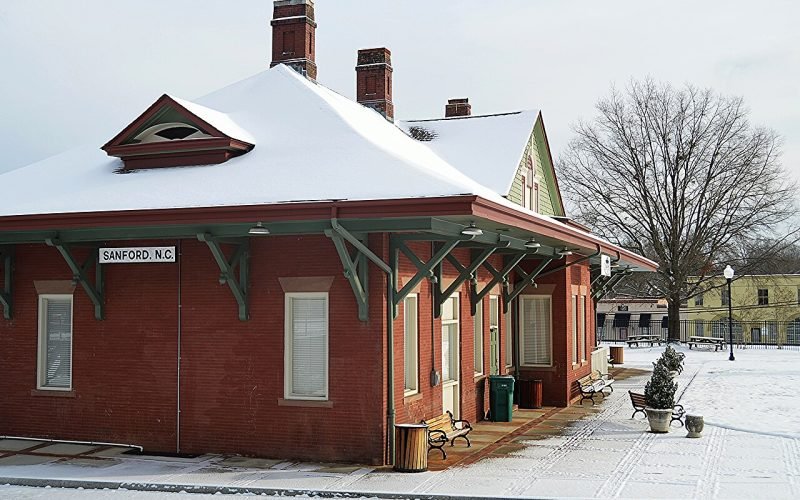
Salisbury grew with the railroad, and its restored passenger station is the easiest place in town to feel that history. The station is listed on the National Register of Historic Places.
It is often cited as a strong example of adaptive reuse, meaning an old building given a new life rather than torn down. It was once a vital transportation hub for the region. The best part is that it still works.
The building now operates as the Salisbury Amtrak Station, so trains continue to stop here. That makes it a practical way to arrive in town by rail, not just a building to look at. A visit here is short.
Fifteen to thirty minutes is enough to look at the building inside and out. Train fans may want to time a visit to see a train come through. The station connects naturally to the North Carolina Transportation Museum in Spencer, a few miles northeast.
The museum tells the larger story of the railroad shops that kept trains running across the South. Seeing the working station first and then the museum gives a good sense of how important rail was to this part of North Carolina.
The station sits on Depot Street, close to downtown. Combine it with a walk past the Ice House and the downtown murals.
Address: 215 Depot St., Salisbury, N.C.
6. Crossroads: Past Into Present
Crossroads: Past Into Present is Salisbury’s best-known mural and a fun stop for anyone walking downtown. Salisbury native Cynvia Arthur Rankin painted it.
The mural shows turn-of-the-century Downtown Salisbury, and it includes more than 100 local citizens dressed in clothes of that period. Part of the fun is picking out the details: the storefronts, the figures and the street life of an earlier time.
The mural has received national recognition for its artistic and historical significance. It works as a kind of picture book of the town’s past, which makes it a nice complement to the Rowan Museum’s exhibits.
Because it is an outdoor wall mural, you can see it any time, day or evening. There is no ticket and no line. Afternoon light is usually good for photos. Plan fifteen minutes or so.
The mural is on West Fisher Street, so it fits easily into a walk that also takes in the Meroney Theater on Main Street and the Norvell Theater on East Fisher Street. Kids often enjoy trying to count the people in the scene. Pair it with lunch downtown and a stroll through Bell Tower Green for an easy, low-cost afternoon in the center of town.
Address: 115 W. Fisher St., Salisbury, N.C.
7. Bell Tower Green
Bell Tower Green is Salisbury’s main downtown park and the place where the community gathers for events. The park covers three acres of green space, trees and gardens, a calm break from the surrounding streets.
Its centerpiece is the historic Bell Tower, which dates to about 1892. It was once part of First Presbyterian Church and the Salisbury Female Academy, and it is a focal point from every part of the park. The layout suits different visitors.
A circular lawn with a stage hosts performances and leaves plenty of room to sit. Creative play spaces give kids somewhere to burn off energy, and outdoor reading areas sit near the Rowan Public Library. Quieter corners work for studying or resting.
The events calendar is busy. Annual events include Pops at the Post, a tree lighting after the holiday parade, Summer Riffs Concerts and College Night Out. Check the schedule if you want to catch one. Park hours are 8:00 AM to 8:00 PM.
The formal gardens around the Bell Tower can be reserved for weddings and parties, so you may see an event in progress. Allow under an hour for a stroll, or longer if there is a concert. It makes a good central break between the downtown museums and theaters.
Address: 141 E. Council St. Salisbury, NC 28144
8. Waterworks Visual Arts Center
Waterworks Visual Arts Center is Salisbury’s main art space, and it adds a modern note to a downtown known mostly for history. The center runs galleries and a museum store in downtown Salisbury. Exhibitions change through the year.
The current show, Constructed: Art, Architecture and the Spaces Between, runs through March 13, 2027, which makes it a natural fit for a town so focused on its buildings. Waterworks is more than a gallery.
It offers youth and family workshops and adult studio classes, so visitors can make art as well as look at it. It also has sculpture gardens to wander outside.
Gallery hours are Monday to Friday from 10 a.m. to 5 p.m. and Saturday from 11 a.m. to 4 p.m. Some holidays affect these hours, so check before visiting around a holiday weekend. Plan an hour or two.
The center is a good choice on a rainy day, or for families looking for a hands-on class. It sits on East Liberty Street, close to the Oak Grove-Freedman’s Cemetery & Memorial and Bell Tower Green, so it fits well into a downtown walk.
Look at the workshop schedule ahead of time if you want to take part, since classes may need sign-up in advance.
Address: 123 East Liberty Street, Salisbury, NC, 28144
9. Meroney Theater
The Meroney Theater is the historic home of Piedmont Players Theatre, and an evening show here is one of the best ways to spend a night in Salisbury. The theater is the company’s mainstage, used for plays and musicals.
Its historic setting gives each performance a sense of occasion. Piedmont Players is a non-profit community theatre that offers productions and theatre education for both children and adults.
Its goal is to make theatre accessible to everyone in the community. The company has a second venue, the Norvell Theater, on East Fisher Street. That space is used for youth theatre and contemporary works.
Families with young children may find shows at the Norvell a better fit, while the Meroney handles the larger musicals. Tickets are sold through Piedmont Players.
Parking is available near both downtown venues, so you can walk to dinner before the show. The theatre lists wheelchair seating and other accessibility details for visitors who need them.
Plan two to four hours for a show, including time to arrive and find a seat. Check the season schedule before your trip and book ahead for popular musicals.
The theater sits on South Main Street, steps from the downtown murals and a short walk from the Rowan Museum, which makes it easy to combine a day of sightseeing with an evening performance.
Address: 213 S Main St Salisbury, NC 28144
10. Livingstone College

Livingstone College is one of Salisbury’s most important institutions and a key stop on the city’s African American Heritage Trail. The college is a private historically black college founded in 1879. It is affiliated with the A.M.E. Zion Church.
Its campus and the surrounding Union Hill district have a long past. The land was once part of the Frohock plantation, established in 1761. The campus also has a Civil War connection.
In April 1865, a detachment of General Stoneman’s Union troops entered Salisbury through what is now the campus. The story goes that the soldiers camped nearby, which is how the area got the name Union Hill.
Look for remnants of the old Salisbury-Taylorsville Plank Road on the campus. It is an easy detail to miss, but it shows how people once traveled through this part of the state. Allow an hour or so to walk the grounds.
Keep in mind that this is a working college, so be respectful of classes and students. The college is part of the African American Heritage Trail, and the trail brochure is available at the Rowan County Visitor Center.
Pair a visit with Soldiers Memorial A.M.E. Zion Church downtown, which once housed the office of Livingstone’s president, Joseph C. Price.
Address: 701 W. Monroe St., Salisbury, N.C.
11. Soldiers Memorial A.M.E. Zion Church
Soldiers Memorial A.M.E. Zion Church is a historic downtown church with deep roots in Salisbury’s African American community. The church was founded in 1865 as the Salisbury Station and Mount Zion Society.
Its name was later changed to honor the Union soldiers who fought to free enslaved people. That choice of name says a lot about what the end of the war meant to its founders. The church bought its property in 1873.
Its building later housed the office of Joseph C. Price while he served as president of Livingstone College, linking the church directly to the college a short drive away. This is an active church.
Visit respectfully and check service times before going inside. Many visitors simply view the building from the street and read about its history. Plan a short stop, usually under an hour.
The church sits on North Church Street, close to the Oak Grove-Freedman’s Cemetery & Memorial at Church and Liberty streets. Walking between the two takes only a few minutes.
Together with Livingstone College and the Rowan Museum’s African American exhibits, these sites form a strong half-day route through Salisbury’s Black history. Pick up the African American Heritage Trail brochure at the Rowan County Visitor Center to find other stops along the way.
Address: 306 N. Church St., Salisbury, N.C.
12. Salisbury Ice House
The Salisbury Ice House is a small but telling piece of the town’s working past. It was built in 1912, at a time when ice and fuel were essential to daily life. Before home refrigerators, ice houses like this one kept food cold and businesses running.
The remaining structure is a reminder of Salisbury’s early 20th-century commercial history. The building has found a new use. It hosts the Historic Salisbury Foundation’s Second Saturday Salvage.
If you enjoy salvage and old building pieces, plan your visit around that event. On other days, the Ice House is mainly something to see from outside. Fifteen minutes is enough to look at the building and take a photo.
The Ice House sits on East Horah Street, close to downtown and not far from the railway station on Depot Street.
Together, the two show the industrial and transportation side of Salisbury’s history, a good contrast to the grand homes and the courthouse. Pair it with the Salisbury Railway Passenger Station and a walk through downtown.
Anyone renovating an old house may find the salvage sale the highlight of their trip. Check the Historic Salisbury Foundation’s calendar to confirm the sale dates before you plan around them.
Address: 224 E. Horah St., Salisbury, N.C.
13. Dan Nicholas Park
Dan Nicholas Park, on the east side of Salisbury, is the best family outing in the county and can easily fill a day. Admission to the park is free, though some attractions and fishing have fees. That makes it a budget-friendly choice.
The park has a campground, a lake, a carousel, a train, a gemstone mine, an aquarium and nature center, and animal habitats. Kids can move from one activity to the next without getting bored. Lake Murtis is the 10-acre lake at the center of the park.
Fishing is allowed, and the park’s own paddle boats are the only boats on the water. Swimming is not allowed. For picnics, the park has 17 covered shelters with charcoal grills.
Shelters cost extra on Saturday, Sunday and holidays, and you can reserve them online or by phone. A few details help. Pets are welcome on a leash, but not on the attractions.
The train ride is closed until further notice, so do not promise it to young children. Check the park’s page or its Facebook updates for current attraction status. Plan a half day or more.
Bring a picnic, cash or a card for attraction fees and comfortable shoes. Families with young kids will get the most from the carousel, the animals and the nature center.
Address: 6800 Bringle Ferry Road Salisbury, NC 28146
14. North Carolina Transportation Museum

The North Carolina Transportation Museum is the biggest attraction near Salisbury, and it deserves a half day or more. It sits in Spencer, about 3 miles northeast.
The museum sits on the 60-acre site of the former Southern Railway Spencer Shops, once a major steam locomotive repair facility. Its centerpiece is the Bob Julian Roundhouse, the largest remaining roundhouse in North America.
It holds locomotives, rail cars and a replica Wright Flyer. The other buildings are worth time too. The huge Back Shop houses antique automobiles, fire trucks and rail cars. The Flue Shop has the Bumper to Bumper automotive exhibit.
Barber Junction Depot, a train station built in 1898, serves as the visitor center. Admission is $10 for adults, $9 for seniors and military and $8 for children 3 to 12. Adding a train ride brings it to $20 for adults and $16 for children.
The ride is worth it for kids. From March to Labor Day, hours are Tuesday to Saturday 9 a.m. to 5 p.m. and Sunday noon to 5 p.m. The museum is closed Mondays.
In late fall, on THE POLAR EXPRESS train ride event days, it closes at 2 p.m. Wear comfortable shoes, since the site is large. Pair it with the doll and toy museum nearby in Spencer.
Address: 1 Samuel Spencer Dr. Spencer, NC 28159
15. N.C. Museum of Dolls, Toys & Miniatures
Also in Spencer, about 3 miles northeast, the N.C. Museum of Dolls, Toys & Miniatures is a charming small museum that pairs well with the transportation museum nearby.
This nonprofit museum shows a collection of dolls, toys, trains, dollhouses and miniatures from many generations.
Walking through the cases is a trip back through childhood for many adults, as they spot toys they once owned or remember from relatives’ homes. It is a favorite with families and collectors.
Children enjoy the detail in the dollhouses and the trains, while collectors come for the range of pieces on display. The miniatures reward a slow look, since much of the craft is in the tiny details. Plan an hour or so.
The museum is smaller and quieter than the transportation museum, which makes it a good way to wind down after a busy morning among the locomotives. The museum sits on South Salisbury Avenue in Spencer, close to the transportation museum’s entrance.
Seeing both makes a full day in Spencer. If you have time left, stroll the streets of Spencer, the town that grew up around the railroad shops. Hours are not listed on the pages used here, so check before you go. Small museums often keep limited days, and you do not want to arrive to a locked door after driving over.
Address: 440 South Salisbury Ave., Spencer, N.C.
16. Old Stone House
The oldest structure in Rowan County stands in Granite Quarry, about 5 miles southeast of Salisbury. The Old Stone House is a direct link to the area’s colonial settlers. German immigrant Michael Braun built the house in 1766.
He used his growing prosperity to create a large Piedmont plantation. The house has been fully restored, and its two stories show German Colonial and Georgian design. Walking through it gives a clear picture of colonial life on the frontier.
The house comes alive during special events. The Rowan Museum holds annual events here, including Springtime in the Backcountry and German Fest. These bring reenactors and activities that make the history easy to grasp, especially for kids.
The season is short. The Old Stone House is open Saturday and Sunday, April to October, from 1 to 4pm. Plan a weekend afternoon during those months. Outside that window, you can still see the building from outside, but you cannot go in.
Allow an hour or two. The house is a short drive from downtown Salisbury, so it pairs well with a morning at the Rowan Museum, which manages the site. On the same drive, you can continue southeast to Gold Hill to add gold mining history to your colonial afternoon.
Address: 770 Old Stone House Rd., Granite Quarry, N.C.
17. Historic Gold Hill Village
Historic Gold Hill Village preserves a former gold rush town, and the 14-mile drive southeast to Gold Hill makes a fine half-day trip from Salisbury. Gold Hill’s mining story dates back to 1824.
Gold helped shape the region’s early economy, and Gold Hill grew into a boom town. Today the village is preserved as a living history destination. The setting is the main pleasure.
Visitors stroll wooden sidewalks past restored 19th-century buildings, which gives the village an old-time feel that is rare in modern North Carolina. It is a relaxed place to wander, browse and take photos. Plan your trip around special events if you can.
Gold Hill Founders Day is held each year in late September and brings the town to life. Allow an hour or two in the village. Gold Hill Mines Historic Park is right next door, so plan to see both.
Together they show both the town that grew up around the mines and the mining sites themselves. Gold Hill sits southeast of Salisbury, beyond Granite Quarry. That makes the Old Stone House a natural stop on the drive down.
Combine the three for a full day of colonial and gold rush history. Wear comfortable shoes for the wooden sidewalks and trails, and check for current shop hours before you go.
Address: 755 St. Stephens Church Rd., Gold Hill, N.C.
18. Gold Hill Mines Historic Park
Right next to the historic village in Gold Hill, about 14 miles southeast, the Gold Hill Mines Historic Park shows the working side of the gold rush. The park is part of the North Carolina Gold Trail, which links gold mining sites across the state.
It has hiking paths that lead past historic mining sites, so the visit mixes a walk in the woods with history. Several sites stand out. Look for the Powder House, where explosives were kept, and the Gold Hill Jail.
Gold Hill Pond adds a quiet spot along the way. The most unusual feature is a primitive Chilean Ore Mill, a kind of machine used to crush rock and free the gold. It is a rare chance to see how early miners worked.
Wear walking shoes, since the paths are unpaved. Allow an hour or two to walk the trails and see the main sites. This park pairs perfectly with Historic Gold Hill Village.
Walk the mining park first to understand how the gold was found, then stroll the village to see the town it built. Families with kids who like hands-on history will find the old mill and jail especially interesting.
Gold Hill makes a good day trip combined with the Old Stone House in Granite Quarry on the way. Bring water on warm days.
Address: 770 St. Stephens Church Rd., Gold Hill, N.C.
19. China Grove Roller Mill

To see how farming changed when machines arrived, drive about 10 miles southwest to the China Grove Roller Mill in China Grove. Local entrepreneurs built the mill in 1903 to mechanize grain grinding.
That was a big shift for area farmers, who no longer had to grind grain by older methods. For more than a century, the mill served the local farming community. Today the restored mill operates as a museum of the area’s farming and industrial past.
It is one of the Rowan Museum’s four historic properties, along with the courthouse museum downtown and the Old Stone House. The hours are limited, so plan carefully. The mill is open the 1st and 3rd Saturdays, April to October, from 11am to 3pm.
Outside those days, you can see it only from outside. Allow under an hour for a visit. The mill is a good stop for anyone curious about how rural Rowan County worked a century ago. Kids who like machines may enjoy seeing how grain moved through the mill.
China Grove has two other historic stops nearby: the Historic Neely School and The Price of Freedom Museum. Group all three for a half-day trip southwest of Salisbury, ideally on an open Saturday so you can get inside the mill. Patterson Farm is also close, if you want to add a working farm.
Address: 308 N. Main St., China Grove, N.C.
20. The Price of Freedom Museum
The Price of Freedom Museum is a moving tribute to American service members, located near China Grove about 12 miles southwest. The museum honors U.S. service members from all branches of the military who gave their lives in service to the nation.
Its collection has more than 5,000 artifacts. Among them are rare uniforms and personal items that belonged to the people being remembered. The displays tell personal stories of sacrifice, service and remembrance across generations.
That focus on individuals makes the visit feel personal rather than a dry list of battles. Expect it to be an emotional stop for many visitors, especially veterans and military families.
Check the museum’s hours before driving out, since smaller museums often keep limited days. Allow an hour or two to see the collection properly. The museum suits older children and adults best, given its serious subject.
It is a fitting stop to pair with Salisbury National Cemetery, where veterans from many wars are buried, if you want to spend a day reflecting on military history.
It also fits into a trip to China Grove alongside the China Grove Roller Mill and the Historic Neely School. Those two stops add farm and education history to the same outing. Plan the order so you end with a meal in town before heading back to Salisbury.
Address: 2420 Weaver Rd., China Grove, N.C.
21. Historic Neely School
A preserved one-room schoolhouse with a powerful story stands near China Grove, about 11 miles southwest of Salisbury. Julius Erastus Neely founded the school around 1910. He was an educator, minister and carpenter, and the son of an enslaved person.
He understood the value of education for his family and community, and he worked with family and friends to build the school himself.
The single-room school educated about 1,300 African American students before 1948, when local schools for African Americans were provided by the school system. That number shows how many lives one small building shaped.
Visitors can view the preserved one-room schoolhouse. Standing in a single classroom that served so many students for so long makes the history easy to understand, especially for children. This is a short stop, usually under an hour.
It is part of Rowan County’s African American heritage sites, along with Livingstone College and Soldiers Memorial A.M.E. Zion Church in Salisbury.
Pair it with the China Grove Roller Mill and The Price of Freedom Museum for a half-day in the China Grove area. For a related story of Black education, drive to the Historic R.A. Clement Rosenwald School in Cleveland on another day. Check ahead for open hours before you go, since access may be limited.
Address: 225 Neelytown Rd., China Grove, N.C.
22. Patterson Farm
About 12 miles west near China Grove, Patterson Farm is a working farm, and it adds a taste of modern Rowan County agriculture to a history-heavy trip. Patterson Farm, Inc. grows crops in the China Grove area.
Its site describes what the farm grows, its facilities and its market, called Patterson Repack. A stop here is a chance to see where local produce comes from and to buy some to take home. What you can do depends on the season.
Farms like this often change their offerings through the year, from fresh produce to seasonal activities. Call (704) 857-5242 for current market hours and any seasonal events before you go. Plan an hour or so.
The farm is a nice contrast to the China Grove Roller Mill, which shows how farming worked a century ago. Seeing the old mill and then a working farm on the same day gives a sense of how agriculture in the county has changed.
Families with young children may enjoy the farm setting. Bring a cooler if you plan to buy produce, especially in warm weather. Patterson Farm sits on Millbridge Road west of China Grove.
Group it with the Roller Mill, the Historic Neely School and The Price of Freedom Museum for a full day southwest of Salisbury. Wear shoes you do not mind getting dusty.
Address: 3060 Millbridge Road China Grove, NC 28023
23. Historic R.A. Clement Rosenwald School
A nationally significant site stands in Cleveland, about 14 miles northwest. The Historic R.A. Clement Rosenwald School is one of the most important stops in western Rowan County.
It is the only remaining Plan No. 4-A Rosenwald School in North Carolina. The school represents a nationally significant effort in the early 20th century to expand education for African American students. The visit is guided.
Tours share stories of education, resilience and community leadership, which turn the building into a lesson about the people who studied and taught here. Because tours are guided, check ahead for times before you drive out.
Plan under an hour, or a bit longer if the tour runs deep. The school suits school-age children and adults who want to understand how communities fought for education. The Rosenwald School connects to other African American heritage sites in the county.
The Historic Neely School in China Grove tells a related story of a single community school. Livingstone College and Soldiers Memorial A.M.E. Zion Church in Salisbury add the college and church side of that history.
Cleveland sits west of Salisbury, off the main routes. Make it the focus of a short trip, and see the town’s other historic sites while you are there.
Address: 216 Krider St., Cleveland, N.C.
24. N.C. Music Hall of Fame
About 17 miles southwest in Kannapolis, the N.C. Music Hall of Fame celebrates the state’s musicians and their influence on American music. It is an interactive museum honoring North Carolina musicians across many genres.
Exhibits cover legendary artists, regional sounds and the state’s wider impact on American music. The museum has a neighbor worth seeing. The Curb Museum for Music & Motorsports sits next door at the same address.
It explores where racing and music meet, with racing history alongside exhibits tied to country music. The two make a natural pair for anyone who likes both music and racing. See both museums on one visit, since they share a location.
Allow an hour or two for the pair. This is a good stop on a rainy day or for music fans of any age. It also fits well with a Kannapolis Cannon Ballers game at Atrium Health Ballpark, which is in the same downtown area.
Arrive in the afternoon, see the museums, then stay for an evening game during baseball season. Check the museum’s hours before you go, as they may vary by season. Kannapolis is a short drive southwest of Salisbury, so the trip fits into a single afternoon.
Address: 600 Dale Earnhardt Blvd., Kannapolis, N.C.
25. Atrium Health Ballpark
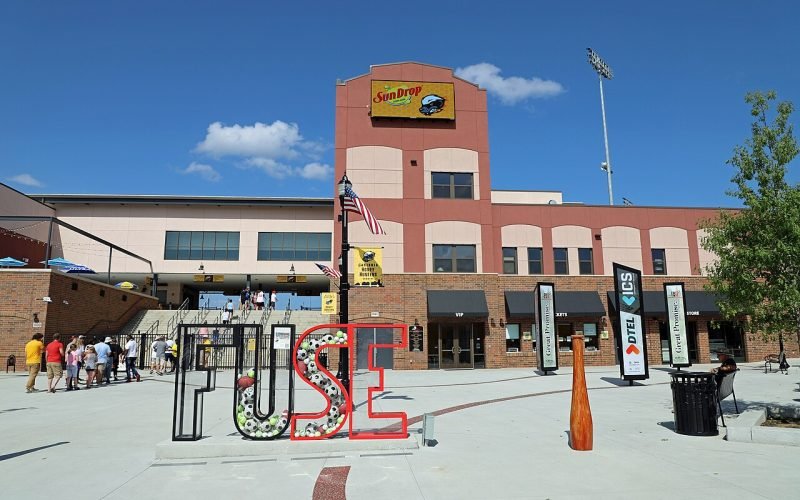
Professional baseball near Salisbury means Atrium Health Ballpark in Kannapolis, about 17 miles southwest. The ballpark is home of the Kannapolis Cannon Ballers, the Carolina League affiliate of the Chicago White Sox.
Minor league games are affordable and relaxed, with players working their way toward the majors. That makes a game a good family outing. The stadium holds 4,930 people and opened in 2020.
It sits next to the North Carolina Research Campus and anchors a $100 million redevelopment of downtown Kannapolis. The new downtown around it has made the area a more lively place to spend an evening.
The ballpark is used for more than Cannon Ballers games. It also hosts amateur baseball, community events and concerts, so there may be something on even outside the team’s season. The ballpark is at Chestnut Ave and West B Street.
Plan two to four hours for a game, including time to eat and walk around. Check the Cannon Ballers’ schedule for game dates and promotions before you go.
Pair a game with the N.C. Music Hall of Fame in the same part of town for a full Kannapolis afternoon and evening. Summer evenings are the classic time to come. Bring sunscreen for day games.
Address: 35.49917, -80.62667, NC
26. Boone’s Cave Park
Boone’s Cave Park, near Lexington about 15 miles northeast, ties the area to Daniel Boone’s frontier years and makes a fun outing for adventurous families. The county park was established in 1909 by the Daniel Boone Memorial Association.
The cave inside is rumored to be where the Boone family spent its first winter in the region in 1751, when Daniel was a teenager. Whether or not the story is exact, it gives the place a sense of history. The cave is small and tight.
It is 140 feet long, and most sections require crawling to get through. That makes it exciting for kids and adults who do not mind getting dirty, but not a good fit for anyone uneasy in tight spaces. The setting adds to the trip.
The park sits within sight of the Yadkin River and is part of the Yadkin River Trail. You can combine a look at the cave with a walk by the river. Bring a flashlight and wear old clothes if you plan to crawl inside. Allow an hour or two.
The park sits across the Yadkin River from Rowan County, toward Lexington. Pair it with High Rock Lake or Childress Vineyards in the same direction to make the drive worthwhile. Check for any closures before you go, since access to the cave can change with conditions.
Address: 35.797, -80.465, NC
27. High Rock Lake

For a day on the water, head about 16 miles east to High Rock Lake near Southmont, the big body of water near Salisbury. The lake is a reservoir on the Yadkin River in Davidson and Rowan counties.
It was built in 1926-27, and when it was finished it was the largest reservoir in North Carolina. When full, it covers 15,180 acres with 360 miles of shoreline. That is a lot of water to explore.
The lake suits boaters, anglers and anyone who wants a quiet day by the water. With so much shoreline, it is easy to find a calm cove away from other people. Access is through public and private landings around the shore.
Plan ahead to know where you will put in a boat or find a spot to fish, since the shoreline is spread out and much of it is private. Plan a half day or more if you are boating.
Even a short visit to a landing can be a pleasant break from sightseeing, especially at sunset. High Rock Lake sits east of Salisbury, toward Lexington. It pairs well with Boone’s Cave Park and Childress Vineyards on the same side of the region.
Bring sun protection and water in summer, since there is little shade on open water, and check local rules for boating and fishing before you go.
Address: 35.62889, -80.25111, NC
28. Childress Vineyards
About 22 miles northeast in Lexington, Childress Vineyards is a winery with a racing twist. The winery is owned by NASCAR team owner Richard Childress. His racing career shaped the business.
While racing at California tracks in the 1970s, he spent time off the track at small wineries, and that sparked his interest in starting one of his own. The NASCAR connection shows up on the bottles.
Some of the winery’s wines carry a checkered flag motif, a playful nod to racing. Racing fans tend to enjoy that detail as much as the wine itself. A visit centers on tasting.
Check the winery’s site for tasting hours before you go, since hours can change by season. Allow an hour or two for a tasting and a look around. This is a stop for adults, so plan it as part of a grown-up outing.
Arrange a designated driver if you plan to taste several wines, since the drive back to Salisbury takes a while. Childress Vineyards sits northeast of Salisbury, past the Yadkin River.
That puts it in the same direction as Boone’s Cave Park and High Rock Lake. Combine the three for a day east of town that mixes frontier history, time on the water and a relaxed tasting to finish. It is the farthest stop in this guide, so save it for a day with time to spare.
Address: 35.843143, -80.283279, NC
Things to Do in Salisbury, NC with Kids
The North Carolina Transportation Museum in Spencer is the top pick. Kids see locomotives and a replica Wright Flyer in the Bob Julian Roundhouse, and the train ride add-on costs $16 for children.
The N.C. Museum of Dolls, Toys & Miniatures nearby is a short, easy follow-up. Dan Nicholas Park is the other big day out.
Admission is free, and there is a carousel, a gemstone mine, an aquarium and nature center, animal habitats and paddle boats on Lake Murtis. Bring a picnic for one of its covered shelters.
In town, Bell Tower Green has creative play spaces, and kids can hunt for the more than 100 people painted into the Crossroads: Past Into Present mural. Waterworks Visual Arts Center runs youth and family workshops.
For older, adventurous kids, Boone’s Cave Park has a 140-foot cave you crawl through, and a Kannapolis Cannon Ballers game at Atrium Health Ballpark makes an easy summer evening.
Frequently Asked Questions
What is Salisbury, NC best known for?
Salisbury is known for one of North Carolina’s most intact historic downtowns, the Rowan Museum in its 1857 Courthouse and Salisbury National Cemetery, where more than 11,700 unknown Union soldiers from a Civil War prison are buried. The North Carolina Transportation Museum is about 3 miles away in Spencer.
How much does the North Carolina Transportation Museum cost?
Admission is $10 for adults, $9 for seniors and military and $8 for children 3 to 12. Admission plus a train ride is $20 for adults and $16 for children. It is closed Mondays, so check the hours before you go.
Is Dan Nicholas Park free?
Yes. Admission to Dan Nicholas Park is free, but some attractions and fishing have fees. Shelters cost extra on weekends and holidays, and the park’s train ride is closed until further notice.
When is the Old Stone House open?
The Old Stone House in Granite Quarry is open Saturday and Sunday, April to October, from 1 to 4pm. Built in 1766, it is the oldest structure in Rowan County. Outside those months you can only see it from outside.
What African American heritage sites are in Salisbury?
Downtown, see the Oak Grove-Freedman’s Cemetery & Memorial and Soldiers Memorial A.M.E. Zion Church, then Livingstone College on West Monroe Street. Farther out are the Historic Neely School near China Grove and the Historic R.A. Clement Rosenwald School in Cleveland.
Final Thoughts
Spend your first day downtown on foot. Start at the Rowan Museum when it opens at noon, walk to the Hall House, the Crossroads mural and Bell Tower Green, then see the railway station and the Ice House, and end with a show at the Meroney Theater.
Save the national cemetery, Livingstone College and the heritage sites on Church Street for a second morning, and give Dan Nicholas Park its own day with kids. Group the drives by direction. Spencer is a quick hop northeast.
Granite Quarry and Gold Hill make a southeast loop, and China Grove and Patterson Farm fill a southwest one, with Kannapolis just beyond. Cleveland sits off on its own to the northwest, and Boone’s Cave, High Rock Lake and Childress Vineyards share the drive east.
Know a place in Salisbury we missed? Suggest a place